AI Tool for SEO Content Writing: Top 7 Platforms Compared
Compare the best AI tools for SEO content writing. Feature breakdowns, pros and cons, and which platform fits your content workflow best.

Choosing the right AI tool for SEO content writing determines whether you publish optimized articles in minutes or spend hours wrestling with generic output that misses the mark. The platform you select shapes your entire workflow, from keyword research to final publication, and the differences between tools can mean the gap between ranking on page one or getting lost in search results.
The market offers dozens of platforms claiming to automate SEO content, but each takes a fundamentally different approach to research depth, optimization strategy, and publishing integration. Some excel at speed, others at structure, and a select few tackle the complete end-to-end process that actually moves the needle for traffic growth.
What Makes an AI Tool Effective for SEO Content Writing?
An effective AI tool for SEO content writing combines accurate keyword targeting with natural language that satisfies both search engines and human readers. The platform must understand search intent, structure content around semantic relevance, and produce articles that answer the specific questions your target audience types into Google or asks ChatGPT, rather than generating surface-level text that merely includes your target phrase a few times.
The best tools integrate research capabilities directly into the writing process, pulling competitor analysis, related questions, and topical depth requirements into a single workflow. This integration eliminates the tedious copy-paste cycle between separate research tools and writing platforms, cutting production time while improving content quality through context that informs every paragraph.
How Do AI SEO Content Tools Compare on Research Depth?
Research depth separates tools that produce thin, generic articles from platforms that generate genuinely competitive content. Basic AI writers pull from their training data alone, which means outdated information and no awareness of what currently ranks for your target keyword, while advanced platforms analyze live search results, extract topical clusters, and identify content gaps your article needs to fill.
Automated research capabilities that scan competitor content, extract headings, and map semantic relationships provide the foundation for articles that compete in crowded niches. Tools like RankHit automate this discovery process, building content briefs that include not just keywords but the actual topical structure Google expects to see, giving your content the semantic coverage that search algorithms reward with higher rankings.
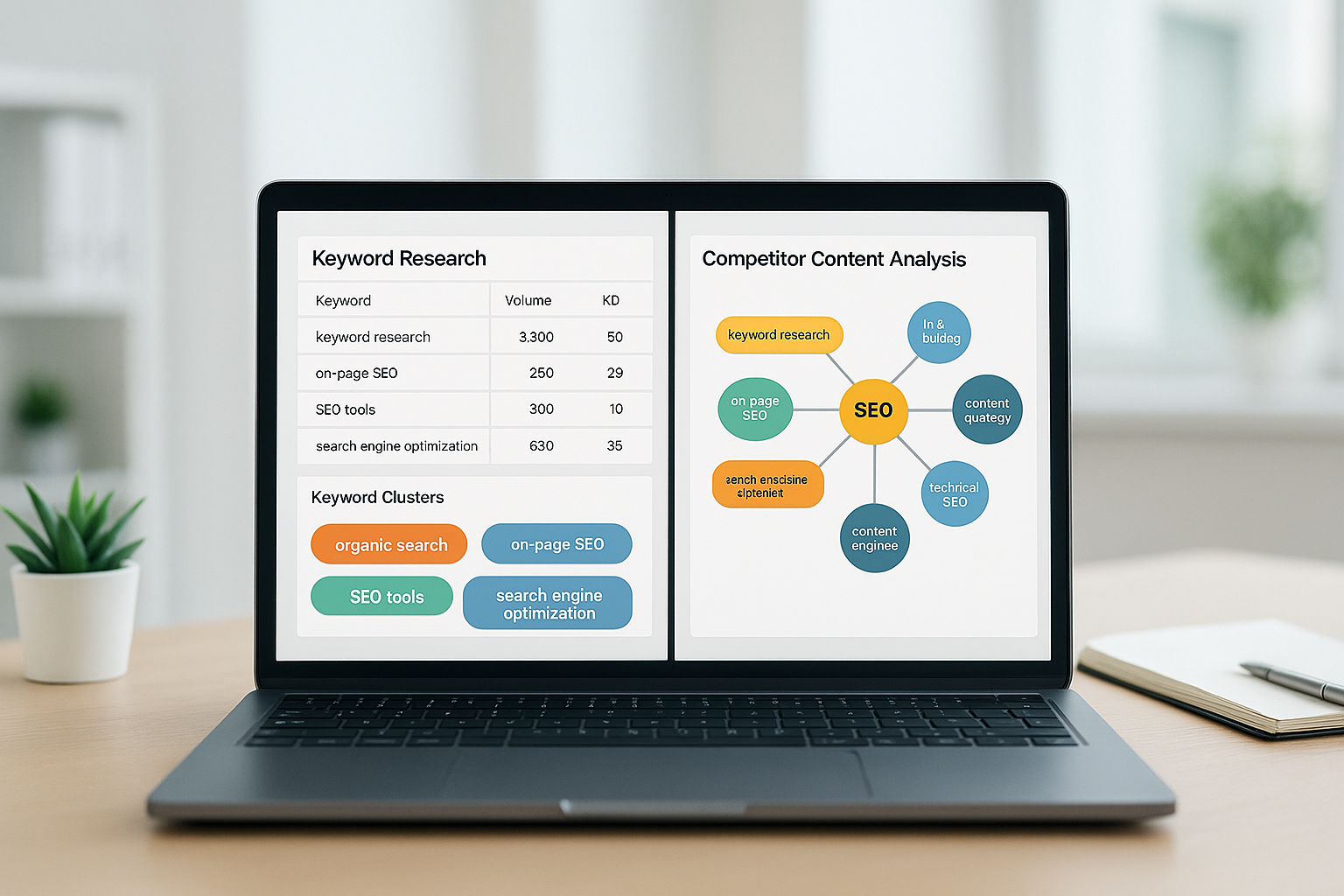
Platform Comparison: Top 7 AI Tools for SEO Content Writing
Each platform in this comparison occupies a distinct position in the market, balancing automation depth, user control, and integration capabilities differently. Understanding where each tool excels helps you match features to your specific content workflow, team size, and publishing frequency rather than chasing the tool with the longest feature list.
| Platform | Best For | Key Strength | Limitation |
|---|---|---|---|
| RankHit | End-to-end automation | Native publishing + AI search optimization | Requires CMS integration |
| Jasper | Teams with brand voice | Customizable templates | Manual keyword research needed |
| Surfer AI | Content scoring focus | Real-time optimization feedback | Separate publishing step |
| Frase | Question-based content | SERP analysis integration | Limited bulk generation |
| Copy.ai | Quick drafts | Speed and simplicity | Minimal SEO research features |
| Writesonic | Budget-conscious users | Affordable pricing tiers | Variable output quality |
| Content at Scale | Long-form articles | High word-count output | Heavy editing often required |
RankHit: Full-Stack SEO Content Automation
RankHit automates the entire content pipeline from keyword discovery through final publication, eliminating manual handoffs between research, writing, and CMS upload. The platform handles keyword clustering, competitor analysis, content generation, internal linking, and direct publishing to WordPress or other supported systems, giving small teams the output capacity of a full content department without the coordination overhead.
What sets RankHit apart is optimization specifically for AI search engines like ChatGPT and Perplexity, structuring content to earn citations in conversational results where traditional SEO tools still focus exclusively on Google rankings. This dual-optimization approach future-proofs your content strategy as search behavior shifts toward AI assistants, capturing traffic from both traditional and emerging search channels simultaneously.
Jasper: Template-Driven Content Creation
Jasper prioritizes brand consistency through customizable templates and voice profiles that maintain tone across large content volumes. Teams that need multiple writers to sound like a single brand voice find value in Jasper's training capabilities, which let you feed examples of your best content and generate new articles that match that style, reducing the editing burden that typically comes with scaling content production.
The trade-off comes in research automation, where Jasper requires you to bring your own keyword strategy and content brief rather than building those elements for you. This manual research step adds time to your workflow and assumes you already have expertise in SEO analysis, making it less suitable for lean teams that need the AI to handle both strategy and execution.
Surfer AI: Optimization Score Focus
Surfer AI centers its workflow around a content score that measures how well your article matches the topical and structural patterns of top-ranking competitors. The real-time feedback loop shows you exactly which terms to add, which sections need expansion, and where your content falls short of the competitive benchmark, turning optimization from guesswork into a clear checklist.
Publishing remains a manual export-and-upload process, which interrupts the workflow and creates opportunities for formatting errors or missed optimization details during the transfer. Teams producing high volumes will feel this friction multiply, as each article requires separate handling rather than flowing automatically from generation to live publication.

Frase: SERP-Driven Research Integration
Frase pulls questions and topics directly from search engine results pages, building content briefs that mirror what already ranks for your target keyword. This SERP-first approach ensures topical relevance by showing you exactly which subtopics Google considers important for that query, reducing the risk of producing content that misses critical semantic elements that competitors cover.
Bulk content generation capabilities remain limited compared to tools built for scale, making Frase better suited for teams that produce a few highly polished articles each week rather than dozens of posts across multiple sites. The platform shines in quality over quantity scenarios where deep research justifies longer production cycles.
Copy.ai: Speed-Optimized Draft Generation
Copy.ai delivers the fastest path from idea to first draft, prioritizing writing speed over research depth or optimization features. The simplified interface removes friction for users who already know their keyword strategy and simply need an AI to execute the writing quickly, turning outlines into readable prose in minutes rather than hours.
SEO research tools are largely absent, which means you need separate platforms for keyword analysis, competitor research, and optimization scoring before Copy.ai enters your workflow. This fragmentation works for teams with dedicated SEO strategists who prepare briefs for writers, but creates gaps for small businesses handling the full process internally.
Writesonic: Budget-Friendly Entry Point
Writesonic offers lower pricing tiers that make AI content generation accessible to startups and solopreneurs testing the waters before committing to premium tools. The platform includes basic SEO features like keyword integration and meta description generation, covering fundamental optimization without the advanced research and scoring capabilities that drive higher price points elsewhere.
Output quality varies more noticeably than with premium alternatives, sometimes requiring substantial editing to reach publication standards. Budget-conscious users accept this trade-off, using Writesonic to generate structure and rough drafts that human editors refine, rather than expecting publish-ready content directly from the tool.
Content at Scale: Long-Form Article Specialist
Content at Scale targets users who need articles in the two-thousand-plus word range, generating comprehensive guides and pillar content that covers topics exhaustively. The platform excels at producing high word counts quickly, which matters for content strategies built around authoritative long-form pieces rather than frequent shorter posts.
The length advantage comes with a quality challenge, as longer outputs often include repetitive sections, tangential information, or structural issues that require careful editing. Teams need strong editorial oversight to trim these articles into focused, valuable resources rather than publishing the full generated output unchanged.
Which Features Matter Most for Your Content Workflow?
Your content workflow determines which features deliver actual value versus which remain unused after the initial trial period. Teams publishing directly to WordPress benefit enormously from native publishing integration, while those using custom CMSs may prioritize export flexibility and API access over one-click publication, even though the latter saves more time when it matches your tech stack.
Consider whether your bottleneck sits in ideation, research, writing, optimization, or publishing, then weight that stage most heavily in your evaluation. A tool that generates content twice as fast but requires manual keyword research and competitor analysis may actually slow your overall workflow if research currently consumes most of your time, making a platform with deeper automation in that specific stage the better choice despite slower writing speed.
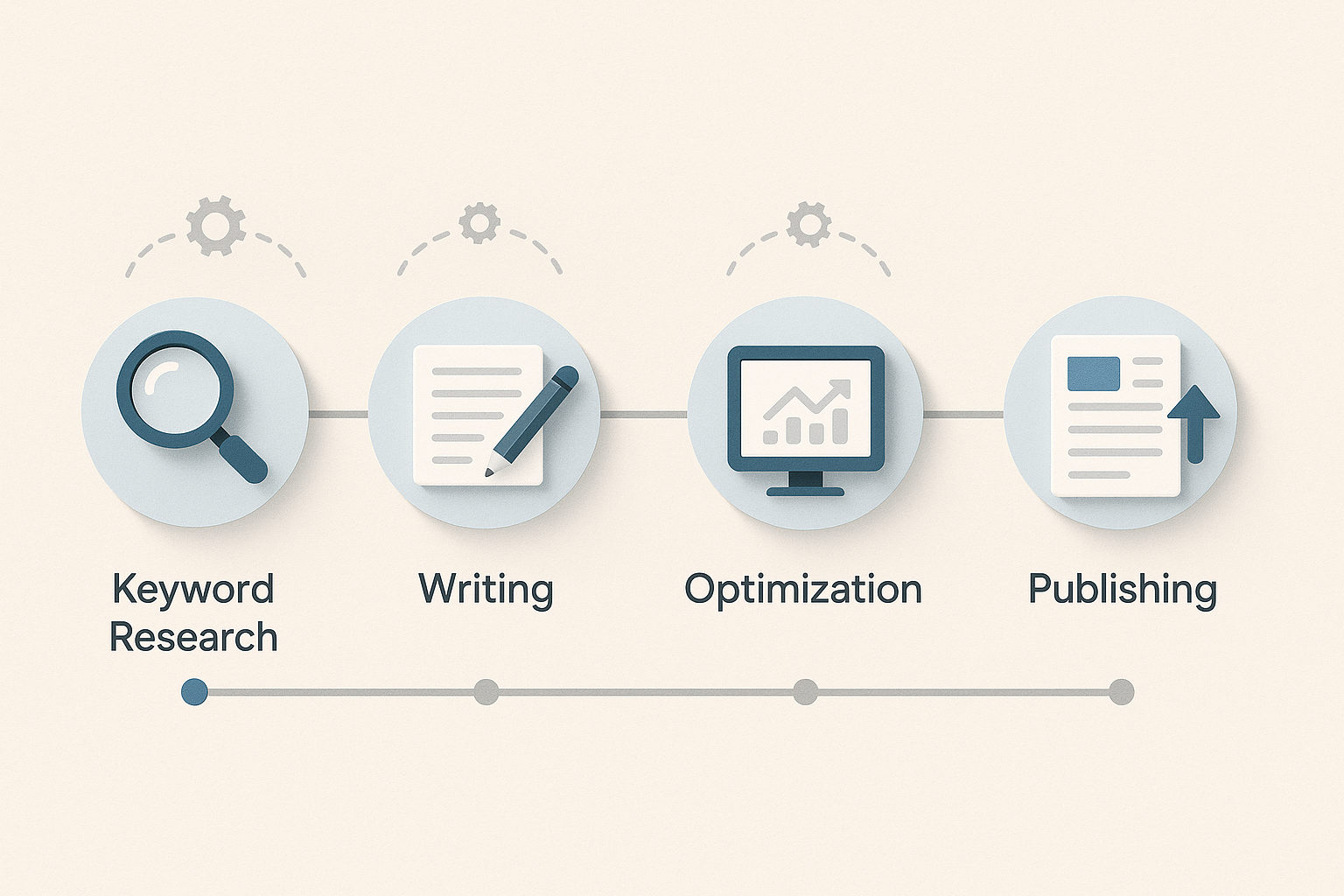
How Does Publishing Integration Impact Content Velocity?
Publishing integration eliminates the manual export, formatting, image upload, and CMS entry steps that consume fifteen to thirty minutes per article even after the content itself is complete. Platforms that publish directly to your site reduce time-to-live by removing these friction points, letting you maintain consistent publishing schedules without dedicating staff time to repetitive upload tasks that add no editorial or strategic value.
The velocity gain compounds when producing content at scale, as the per-article time savings multiply across dozens or hundreds of posts per month. A tool that generates slightly slower but publishes automatically often delivers more total published content than a faster writer requiring manual uploads, because the bottleneck shifts from generation to the publishing step that many platforms ignore.
What Role Does Internal Linking Play in AI SEO Tools?
Internal linking automation identifies relevant existing content on your site and inserts contextual links within new articles, building the topical clusters that search engines use to understand site authority and semantic relationships. Manual internal linking requires intimate knowledge of your entire content library and consumes substantial time as your site grows, making automation in this area disproportionately valuable for sites beyond a few dozen posts.
Tools that ignore internal linking force you to either skip this critical optimization or add it manually after generation, breaking the automation promise and reintroducing human bottlenecks. Platforms that build topical authority through automated internal link insertion deliver compound SEO benefits as each new article strengthens the semantic network across your entire site, not just the single new post.
Do AI Content Tools Optimize for ChatGPT and AI Search?
Most AI content tools still optimize exclusively for traditional Google search, ignoring the growing share of queries answered by ChatGPT, Perplexity, and other AI assistants that cite sources rather than listing ten blue links. Content structured for AI search prioritizes direct answers, clear attribution-worthy statements, and semantic clarity that makes it easy for language models to extract and cite your content when answering user questions.
RankHit stands out by optimizing for both traditional and AI search simultaneously, structuring content to rank in Google while also maximizing citation probability in conversational AI results. This dual approach captures traffic from users who still type queries into search engines while also reaching the expanding audience that asks questions directly to AI assistants, diversifying your traffic sources as search behavior continues evolving.
Frequently Asked Questions
What is the best AI tool for SEO content writing?
The best AI tool for SEO content writing depends on whether you prioritize end-to-end automation, manual control, or specific features like brand voice consistency. RankHit offers the most complete automation from keyword research through publishing, while Jasper excels at brand voice and Surfer AI provides detailed optimization scoring, making the right choice dependent on your team size, technical stack, and where your current workflow bottleneck sits.
Can AI content tools replace human SEO writers?
AI content tools can automate the research and drafting stages that consume most of a human writer's time, but strategic decisions about brand messaging, audience nuance, and editorial judgment still benefit from human oversight. The most effective approach uses AI to handle repetitive optimization tasks and initial content structure, freeing human writers to focus on strategic planning, quality control, and the creative elements that differentiate your content from competitors using the same AI tools.
How much does AI SEO content software typically cost?
AI SEO content software ranges from fifty dollars per month for basic plans with limited features to several hundred dollars monthly for platforms with advanced research, bulk generation, and publishing automation. The cost typically scales with word count limits, number of users, and automation depth, with enterprise plans reaching into four figures for agencies managing multiple client sites, making it important to match your investment to actual content volume rather than overbuying capacity you will not use.
Do AI-generated articles rank as well as human-written content?
AI-generated articles rank as well as human-written content when they satisfy search intent, cover topics comprehensively, and follow SEO best practices, because search engines evaluate content quality rather than authorship method. The key difference lies in consistency, where AI maintains optimization standards across every article while human writers vary in thoroughness, but AI can miss nuanced audience needs that experienced writers catch, making hybrid workflows that combine AI efficiency with human editorial judgment the approach that typically produces the best ranking outcomes.
Making the Right Choice for Your Content Strategy
Selecting the right AI tool for SEO content writing requires matching platform capabilities to your specific constraints around budget, team size, technical expertise, and publishing volume. A solopreneur building their first site needs different automation than an agency managing twenty client blogs, and a tool optimized for one scenario will create friction in the other, making honest assessment of your current situation more valuable than chasing the platform with the longest feature list.
The platforms compared here span the spectrum from quick drafting tools to full-stack automation systems, each serving distinct use cases. Test the platforms that match your workflow stage and volume requirements, focusing on how seamlessly each integrates into your existing process rather than how impressive the feature list appears in isolation, because adoption and consistent use matter more than theoretical capabilities that remain unused.
For teams that want to automate the complete content pipeline and optimize for both traditional and AI search, explore how RankHit handles the full workflow from research through publishing, eliminating the manual handoffs that slow content velocity and introducing optimization strategies that capture traffic from emerging AI search channels alongside established Google rankings.

RankHit
RankHit official
RankHit researches keywords, writes SEO articles, and publishes them on autopilot so brands can rank on Google and get cited by ChatGPT.