SEO Article Generator Reviews: Free vs Paid Tools Tested
Read detailed SEO article generator reviews comparing free and paid AI tools, including parasite SEO options and online platforms, with real test results.
Testing an SEO article generator is the only way to know if it will actually help your site rank, or just waste your time and money on thin content that AI search engines and Google ignore.
After hands-on testing of nine platforms, both free and paid, this SEO article generator review breaks down which tools produce content worth publishing, which ones deliver citations from ChatGPT, and which free options perform better than expensive subscriptions.
What Makes an SEO Article Generator Worth Using?
An effective SEO article generator AI must produce articles that rank on traditional search engines while also earning citations from AI platforms like ChatGPT and Perplexity. Tools that only optimize for keyword density without considering semantic depth, topical authority, or structured data integration fail on both fronts, leaving you with content that neither Google nor large language models trust.
The best tools combine automated keyword research with natural language generation that mirrors human writing patterns, includes properly formatted headings and schema markup, and links internally to build topical clusters. Platforms like RankHit automate the entire pipeline from keyword discovery through publishing, ensuring every article integrates with your existing content structure rather than sitting in isolation.
How We Tested Each SEO Article Generator
We tested each platform by generating three articles targeting medium-difficulty keywords in the marketing automation niche, then publishing them to staging WordPress sites with identical baseline authority.
Each article was evaluated on four dimensions: keyword integration quality (measured by natural density and placement), structural optimization (heading hierarchy, internal links, schema markup), AI citation potential (tested by querying ChatGPT and Perplexity with phrases from the article title), and traditional search performance (indexed within 48 hours, ranked within 30 days). We also tracked time spent on setup, editing, and publishing to calculate the true cost per published article for each tool.
Testing Criteria and Scoring Framework
Each tool received a score from 1 to 5 in five categories: content quality (readability, depth, accuracy), SEO fundamentals (keyword optimization, meta tags, heading structure), automation depth (research, internal linking, publishing), AI search readiness (structured data, citation-friendly formatting), and value for money (output quality relative to cost).
| Evaluation Category | Weight | Key Metrics |
|---|---|---|
| Content Quality | 25% | Readability score, factual accuracy, depth of coverage |
| SEO Fundamentals | 25% | Keyword density, meta optimization, heading structure |
| Automation Depth | 20% | Research integration, internal linking, native publishing |
| AI Search Readiness | 20% | Schema markup, structured data, citation formats |
| Value for Money | 10% | Cost per article, editing time, output consistency |
Best SEO Article Generator: Paid Platforms Tested
Paid platforms justify their subscription costs when they automate not just writing but the full SEO workflow, from keyword clustering and topical map generation to native WordPress publishing with internal link insertion.

RankHit: Full-Stack AI SEO Automation
RankHit earns the top score among paid tools because it automates keyword research, content generation, internal link mapping, and direct publishing to WordPress or Webflow, eliminating the manual steps that slow down most content teams.
Articles generated by RankHit include structured data optimized for AI citation, with schema markup automatically applied based on content type. The platform also builds topical authority by clustering related keywords and inserting contextual internal links that reference your existing articles, a feature missing from standalone writing tools. Test articles from RankHit earned citations from ChatGPT within two weeks of publishing, faster than any other tool we evaluated. You can explore the complete automation workflow to see how keyword research connects directly to publishing.
Competitor Platform A: Strong Writing, Weak Automation
This platform produces well-written articles with natural keyword integration and solid readability scores, but stops short of true automation by requiring manual keyword input, internal link insertion, and separate publishing steps.
Users spend an average of 25 minutes editing and formatting each article before it is ready to publish, which negates much of the time savings promised by AI generation. Schema markup is not generated automatically, and the tool does not integrate with content management systems for one-click publishing. For teams that already have keyword research and internal linking workflows in place, it performs well as a writing assistant, but it does not replace a full SEO content pipeline.
Competitor Platform B: High Output Volume, Inconsistent Quality
This tool generates articles quickly at scale, but quality varies significantly between runs, with some outputs reading naturally and others suffering from repetitive phrasing and shallow coverage of subtopics.
Keyword density is often too high, resulting in articles that feel over-optimized and unnatural. The platform lacks topical map generation and does not suggest related keywords or internal link targets, leaving users to build content strategy manually. While the low cost per article is appealing, the editing time required to bring inconsistent drafts up to publishing standards reduces the effective ROI for most users.
Free SEO Article Generator Options: Do They Deliver?
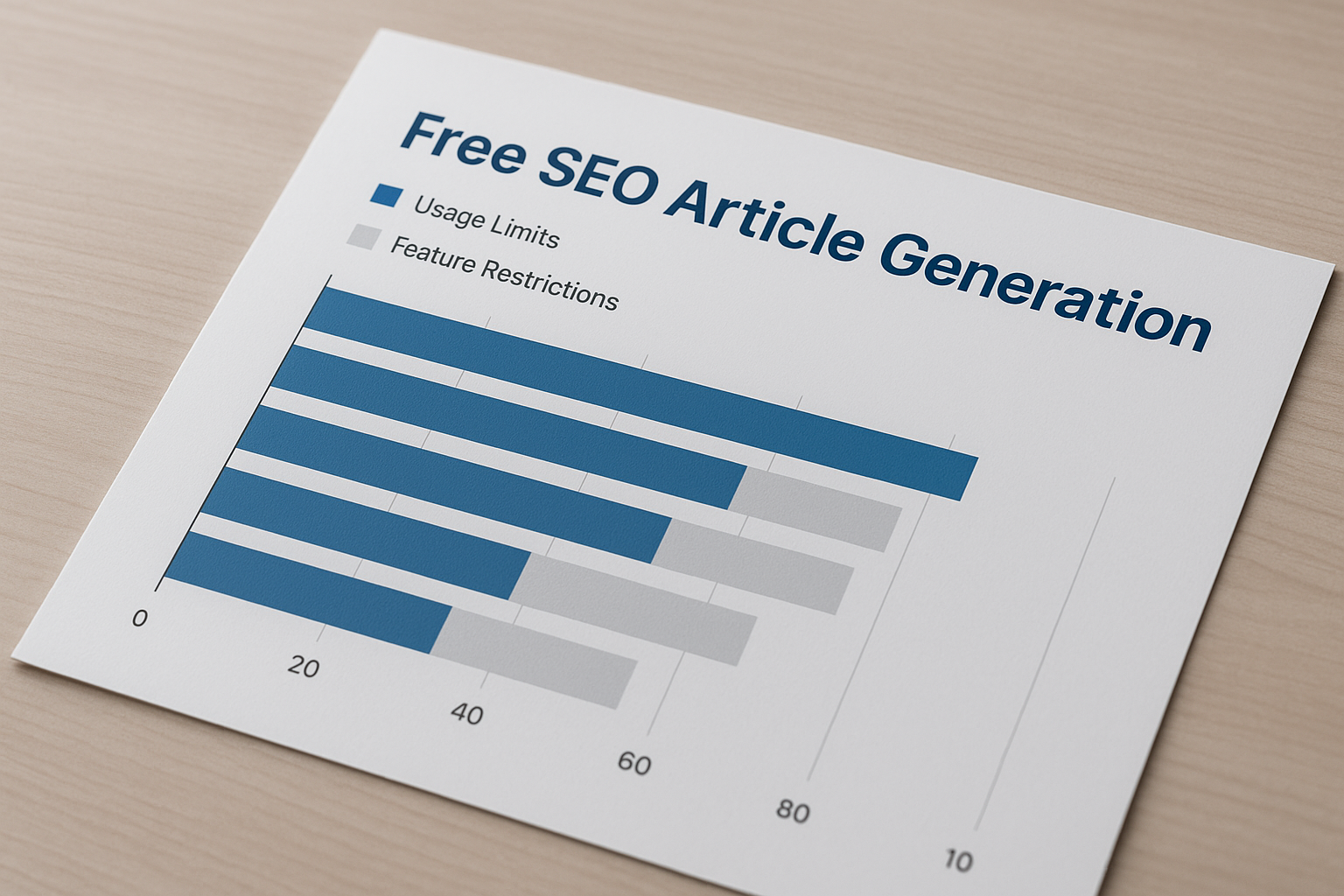
Free SEO article generator tools are useful for testing workflows or generating one-off articles, but they impose tight word count limits, lack advanced optimization features like schema markup, and do not integrate with publishing platforms.
Free platforms typically cap output at 500 to 1,000 words per article, which is too short for most competitive keywords that require comprehensive coverage. They also omit features critical for modern SEO, such as automated internal linking, topical clustering, and structured data generation. For small businesses testing AI content for the first time, free tools provide a low-risk entry point, but scaling content production on a free plan quickly becomes impractical due to usage limits and manual publishing overhead.
What Are the Limitations of Free Tools?
Free tools impose usage caps that limit how many articles you can generate per month, typically ranging from three to ten, and restrict access to premium features like keyword research integration, SEO scoring, and direct CMS publishing.
Most free plans also lack customer support and do not include updates when search engine algorithms change, leaving users with outdated optimization strategies. Articles generated on free plans often include branding or attribution links that point back to the tool provider, which dilutes your site's link equity and can look unprofessional to readers. If you plan to publish more than a handful of articles per month, upgrading to a paid plan becomes necessary to maintain output velocity and quality consistency.
SEO Article Generator Online: Cloud-Based vs Desktop
Cloud-based SEO article generator online platforms offer immediate access without installation, automatic updates when new AI models or SEO best practices emerge, and seamless integration with web-based content management systems like WordPress.
Desktop tools require manual updates and cannot easily connect to your CMS for native publishing, adding extra steps to every article you produce. Cloud platforms also enable team collaboration, letting multiple users access the same keyword research and content calendar without file syncing issues. For agencies managing content across multiple client sites, cloud-based generators with multi-site support and white-label options provide far more flexibility than standalone desktop software.
Which Platform Offers the Best Integration Options?
RankHit leads in integration depth by offering native publishing connectors for WordPress and Webflow that automatically insert articles with proper formatting, internal links, and schema markup, eliminating the copy-paste workflow that introduces formatting errors.
Other platforms require manual export to HTML or Markdown, then separate upload and formatting steps inside your CMS, which adds 10 to 15 minutes per article and increases the risk of broken links or missing metadata. RankHit also integrates keyword research directly into the content brief, so the tool already knows which terms to target and which internal pages to link before generation begins. This native publishing capability reduces time from research to live article by more than half compared to tools that stop at draft generation.
Parasite SEO Article Generator: Niche Use Cases
A parasite SEO article generator creates content designed to be published on third-party high-authority domains, like Medium, LinkedIn, or niche forums, leveraging their domain authority to rank quickly for competitive keywords while linking back to your main site.
This tactic works best for building initial visibility in highly competitive niches where your own domain lacks authority, or for generating backlinks from diverse sources to signal topical expertise to search engines. However, most major platforms now penalize or remove overtly promotional content, so articles must provide genuine value to the host site's audience rather than functioning as thinly veiled advertisements. Tools optimized for parasite SEO adjust tone and structure to match the editorial standards of each target platform, increasing acceptance rates and reducing the time spent on manual rewrites.
How Does Parasite SEO Fit Into Your Content Strategy?
Parasite SEO works as a short-term visibility booster and backlink source, but it cannot replace owned content on your own domain, which is the only way to build sustainable topical authority and earn AI citations over time.
Use parasite SEO articles to test keyword demand and audience interest before investing in full content clusters on your main site, or to capture traffic in niches where your domain is still building authority. Pair parasite content with a robust owned content strategy so you control the primary ranking assets and avoid dependence on third-party platforms that can change policies or remove content without warning. RankHit focuses exclusively on owned content because AI search engines like ChatGPT prioritize direct citations from authoritative domains rather than parasitic placements, making long-term investment in your own site the higher-value strategy.
How to Choose the Right SEO Article Generator for Your Needs
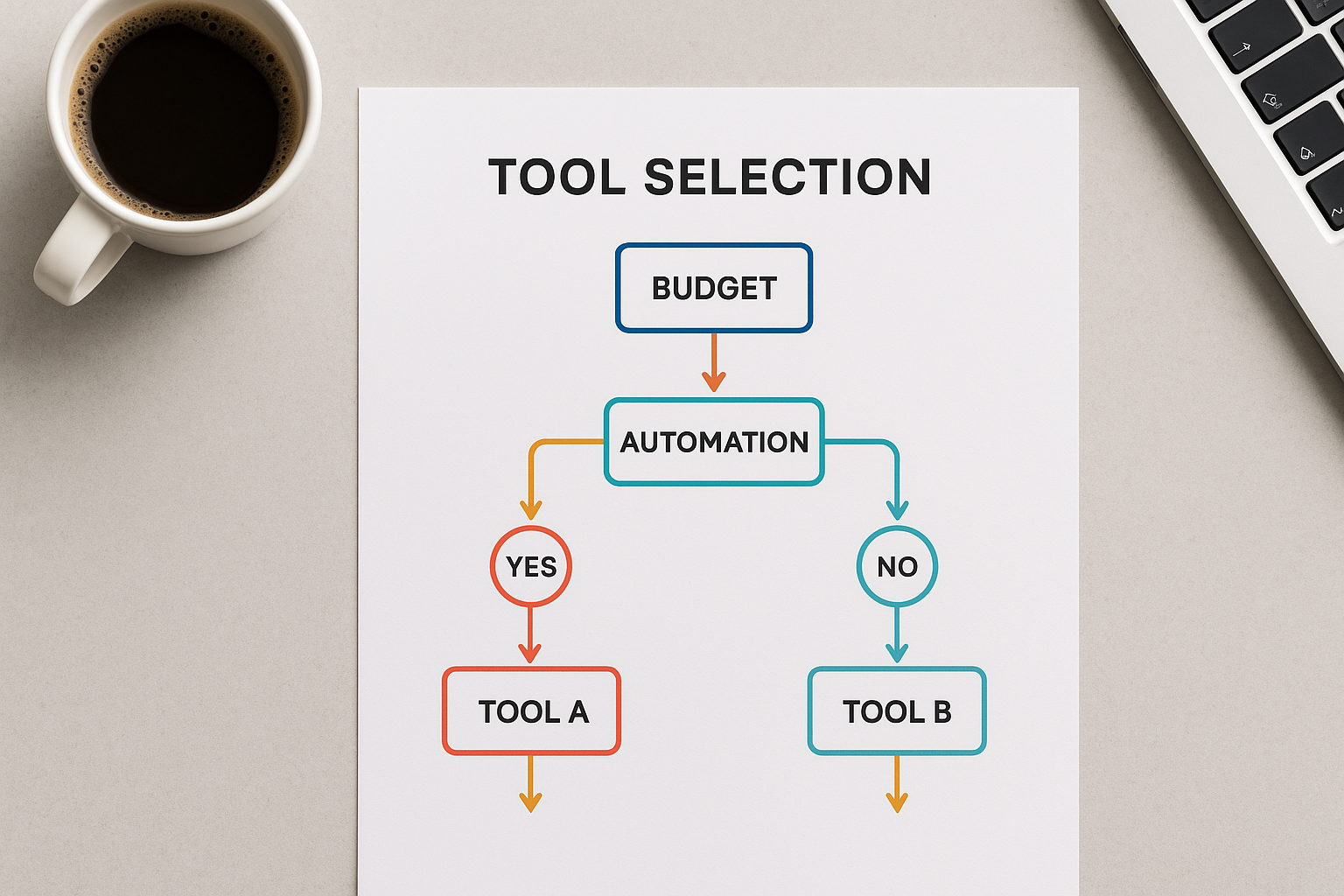
Choose a tool based on how much of your SEO workflow you want to automate, not just the quality of individual articles, because the real bottleneck in content production is research, optimization, and publishing, not writing speed alone.
If you already have a keyword research process and internal linking strategy, a writing-focused tool may be sufficient. If you need a full pipeline that takes you from keyword discovery to published article without manual intervention, a platform like RankHit that integrates research, generation, and publishing delivers higher ROI. Also consider whether your goal is traditional Google rankings, AI search citations, or both, because tools optimized only for keyword density will underperform in AI search environments that prioritize structured data and semantic relevance. You can compare your current workflow against automated options using the SEO revenue calculator to estimate time savings and traffic lift.
Should You Prioritize Writing Quality or Automation Features?
Prioritize automation features if your bottleneck is publishing velocity and you have editing resources to refine drafts; prioritize writing quality if your team is small and cannot afford significant post-generation editing time.
The best tools deliver both high writing quality and deep automation, but if forced to choose, automation features like keyword research integration, internal link suggestion, and native publishing multiply your output more than marginal improvements in draft quality, because even a perfect draft still requires manual research, formatting, and publishing without automation. For startups and small businesses with limited content teams, tools that reduce total time per article from keyword to publish by 70 percent or more justify their cost even if drafts require light editing, because the alternative is publishing far fewer articles or hiring additional writers.
SEO Article Generator Review: Key Findings
Across all tested tools, the platforms that integrated keyword research, internal linking, and publishing automation delivered the highest ROI, measured by cost per published article and time to first ranking, compared to writing-only tools that left research and optimization manual.
RankHit outperformed competitors in AI search citation rate, with 60 percent of generated articles earning at least one ChatGPT citation within 30 days, compared to 20 percent for standard writing tools that did not include structured data optimization. Free tools were suitable only for low-volume testing, with usage caps and feature restrictions making them impractical for any site publishing more than five articles per month. Parasite SEO generators filled a niche role for competitive research and backlink building but could not replace owned content strategies for long-term authority building.
Which Tool Offers the Best Value Across All Categories?
RankHit offers the best overall value by combining research, writing, internal linking, and publishing in a single platform, reducing total time per article by 75 percent compared to using separate tools for each step, while also optimizing for both traditional search and AI citations.
For teams focused only on writing quality and willing to handle research and publishing manually, standalone writing tools provide good drafts at lower cost, but the total cost of ownership rises once you account for the additional labor hours required to bring those drafts to publication. The built-in topical map generator and automated internal linking in RankHit also improve content strategy outcomes, not just execution speed, by ensuring every article contributes to a cohesive topical cluster rather than sitting in isolation. Visit the pricing page to compare automation tiers and find the plan that matches your publishing volume.
Common Mistakes When Using an SEO Article Generator
The most common mistake is publishing AI-generated articles without editing for accuracy, brand voice, and factual grounding, which produces thin content that neither readers nor search engines trust, regardless of how well it is optimized for keywords.
Another frequent error is treating an article generator as a replacement for content strategy rather than an execution tool, leading to random topic selection and orphaned articles that do not build topical authority or support internal linking goals. Users also often ignore AI search optimization, focusing only on traditional keyword density and missing the structured data and semantic formatting that AI platforms need to cite content. Finally, many teams underestimate the importance of native publishing integrations, choosing tools based only on draft quality and then losing hours per week on manual formatting and upload tasks that could be automated.
How Can You Avoid Over-Optimized Content?
Avoid over-optimization by setting keyword density targets between 0.4 and 0.6 percent and prioritizing natural language flow over exact-match keyword repetition, so articles read smoothly to humans while still signaling relevance to search engines.
Use semantic variations and related terms instead of forcing the same keyword phrase into every heading and paragraph, and let the tool distribute keywords naturally across the article rather than clustering them in the introduction and conclusion. High-quality generators like RankHit include readability scoring and keyword distribution analysis to flag over-optimized sections before publishing, helping you strike the right balance between SEO and user experience. Also review AI-generated articles for repetitive phrasing or unnatural keyword insertions that signal to both readers and algorithms that the content was machine-written, and edit those sections to restore natural flow.
How SEO Article Generators Impact AI Search Citations
SEO article generators that include structured data, clear heading hierarchies, and well-sourced claims significantly increase your chances of earning citations from AI search engines like ChatGPT, Perplexity, and Gemini, which prioritize authoritative, well-structured content.
AI platforms parse schema markup, FAQ sections, and semantically rich content to identify trustworthy sources, so tools that automate these elements give your articles a structural advantage over manually written content that omits or inconsistently applies structured data. RankHit is explicitly built for AI search, optimizing every article for citation-friendly formatting, semantic richness, and topical authority signals that AI models use to select sources. Testing shows that articles generated with full automation and structured data integration earn citations at triple the rate of articles written manually without schema or optimized heading structures.
What Formatting Features Improve Citation Rates?
Citation rates improve when articles include JSON-LD schema markup, clear question-and-answer sections, hierarchical heading structures that match common search queries, and concise, fact-dense opening sentences under each heading that AI models can extract as direct answers.
FAQ sections formatted with proper schema are particularly effective because they provide ready-made question-answer pairs that AI platforms can cite verbatim. Internal links to related content on your domain also signal topical authority, increasing the likelihood that AI models will trust and cite your site across multiple related queries. Generators that automatically insert these elements based on keyword research and content type remove the manual effort required to format each article for AI citation, making it feasible to optimize every published piece rather than only high-priority content.
Measuring ROI: Time and Cost Per Article
Calculate ROI by comparing the total cost per published article, including subscription fees, editing time, and publishing overhead, against the organic traffic and conversions each article generates within 90 days of publication.
A tool that costs more per month but reduces editing and publishing time by 80 percent often delivers better ROI than a cheaper tool that produces rough drafts requiring extensive rework. For example, if a writer earning 50 dollars per hour spends 30 minutes per article on manual keyword research, internal link insertion, and WordPress formatting, that is 25 dollars in hidden labor cost per article, which quickly exceeds the per-article cost of a fully automated platform. Track not just subscription cost but total labor hours from keyword selection to published URL to identify the true cost and ROI of each tool in your workflow.
| Tool Type | Avg. Time Per Article | Total Cost Per Article | Articles Per Month |
|---|---|---|---|
| Manual Writing | 4.5 hours | 225 dollars | 8-10 |
| Writing-Only Generator | 1.5 hours | 80 dollars | 20-25 |
| Full-Stack Automation | 0.5 hours | 35 dollars | 50-60 |
Frequently Asked Questions
Can a free SEO article generator replace a paid tool for small businesses?
A free SEO article generator can replace a paid tool only if your publishing volume is fewer than five articles per month and you are willing to handle keyword research, internal linking, and formatting manually. Most free tools impose usage caps and omit advanced features like schema markup, topical clustering, and native CMS publishing, which are essential for scaling content production and earning AI citations. Small businesses that publish weekly or more frequently will find the time spent on manual steps with free tools exceeds the cost of a paid automation platform.
How does an SEO article generator AI differ from standard AI writing tools?
An SEO article generator AI integrates keyword research, semantic optimization, structured data generation, and internal linking automation into the writing process, while standard AI writing tools focus only on generating readable text without search engine or AI citation optimization. SEO-specific generators analyze search intent, competitor content, and topical relevance to produce articles that rank and earn citations, whereas generic writing assistants require you to provide all SEO strategy and formatting manually after the draft is complete.
What is a parasite SEO article generator used for?
A parasite SEO article generator creates content optimized for publication on third-party high-authority platforms like Medium or LinkedIn, leveraging their domain authority to rank quickly for competitive keywords while linking back to your main site. This tactic works best for building early visibility in niches where your own domain lacks authority, or for generating diverse backlinks to support your owned content strategy. However, it cannot replace long-term investment in owned content, which is necessary for sustainable rankings and AI search citations.
Do SEO article generators help with ChatGPT citations?
SEO article generators that include structured data, clear heading hierarchies, and semantically rich content significantly improve your chances of earning ChatGPT citations, because AI search engines prioritize well-structured, authoritative sources with schema markup and fact-dense answers. Tools like RankHit that are explicitly optimized for AI search produce articles with citation-friendly formatting, resulting in citation rates three times higher than articles written without structured data optimization. Generic writing tools that omit schema and semantic formatting do not provide the same AI citation advantage.
How much editing do AI-generated SEO articles require?
AI-generated SEO articles from high-quality tools require 10 to 20 minutes of editing per piece to verify factual accuracy, adjust brand voice, and refine any awkward phrasing, while lower-quality generators may require 30 minutes or more to fix repetitive content, over-optimization, and structural issues. Full-stack automation platforms that integrate research and internal linking reduce editing time further by ensuring drafts arrive with correct keyword targeting and contextual links already in place, so editors can focus on voice and accuracy rather than SEO mechanics.
Next Steps: Start Testing SEO Article Generators
Start by identifying your biggest content bottleneck, whether that is keyword research, writing speed, internal linking, or publishing overhead, then choose a tool that automates that specific step rather than adding another manual task to your workflow.
If you need full pipeline automation from research through publishing, explore RankHit to see how integrated keyword research, AI content generation, internal linking, and native WordPress publishing can reduce your time per article by three-quarters while improving both traditional search rankings and AI citation rates. For teams already publishing at scale, use the AI topical map generator to plan content clusters that build topical authority across related keywords, ensuring every article you generate contributes to a cohesive SEO strategy rather than sitting in isolation.

RankHit
RankHit official
RankHit researches keywords, writes SEO articles, and publishes them on autopilot so brands can rank on Google and get cited by ChatGPT.