ChatGPT SEO: How to Get Your Content Cited by AI Search
Learn ChatGPT SEO strategies to get your content cited in AI search results. Discover optimization techniques, tools, and tactics for visibility.
AI search engines like ChatGPT are transforming how people discover content, and getting your articles cited in AI-generated responses requires a fundamental shift in how you structure and optimize your work. ChatGPT SEO focuses on building structured, authoritative content that language models can parse, understand, and reference when answering user queries.
Unlike traditional search engine optimization that prioritizes ranking positions, ChatGPT SEO optimization centers on creating citation-worthy content that AI models trust enough to include in their responses. This guide covers the core principles, technical requirements, and strategic approaches that make your content visible to AI search systems.
What Is ChatGPT SEO and Why It Matters
ChatGPT SEO is the practice of optimizing content so that large language models recognize it as a credible, structured source worth citing when generating answers. AI models evaluate content based on clarity, factual density, semantic structure, and authoritative signals rather than backlink counts or keyword stuffing.
When a user asks ChatGPT a question, the model draws from a trained dataset and, in newer implementations, live web retrieval to construct an answer. Content that presents information in a clear hierarchy, uses schema markup, and demonstrates topical expertise stands a better chance of being selected as a citation source. This shift means your content must serve both human readers and AI parsers simultaneously.
How AI Models Select Content for Citations
AI search systems prioritize content with explicit structure, verifiable claims, and semantic coherence. When evaluating a page, language models assess how directly the content answers a query, how well it organizes information into logical sections, and whether it includes supporting context that confirms accuracy.
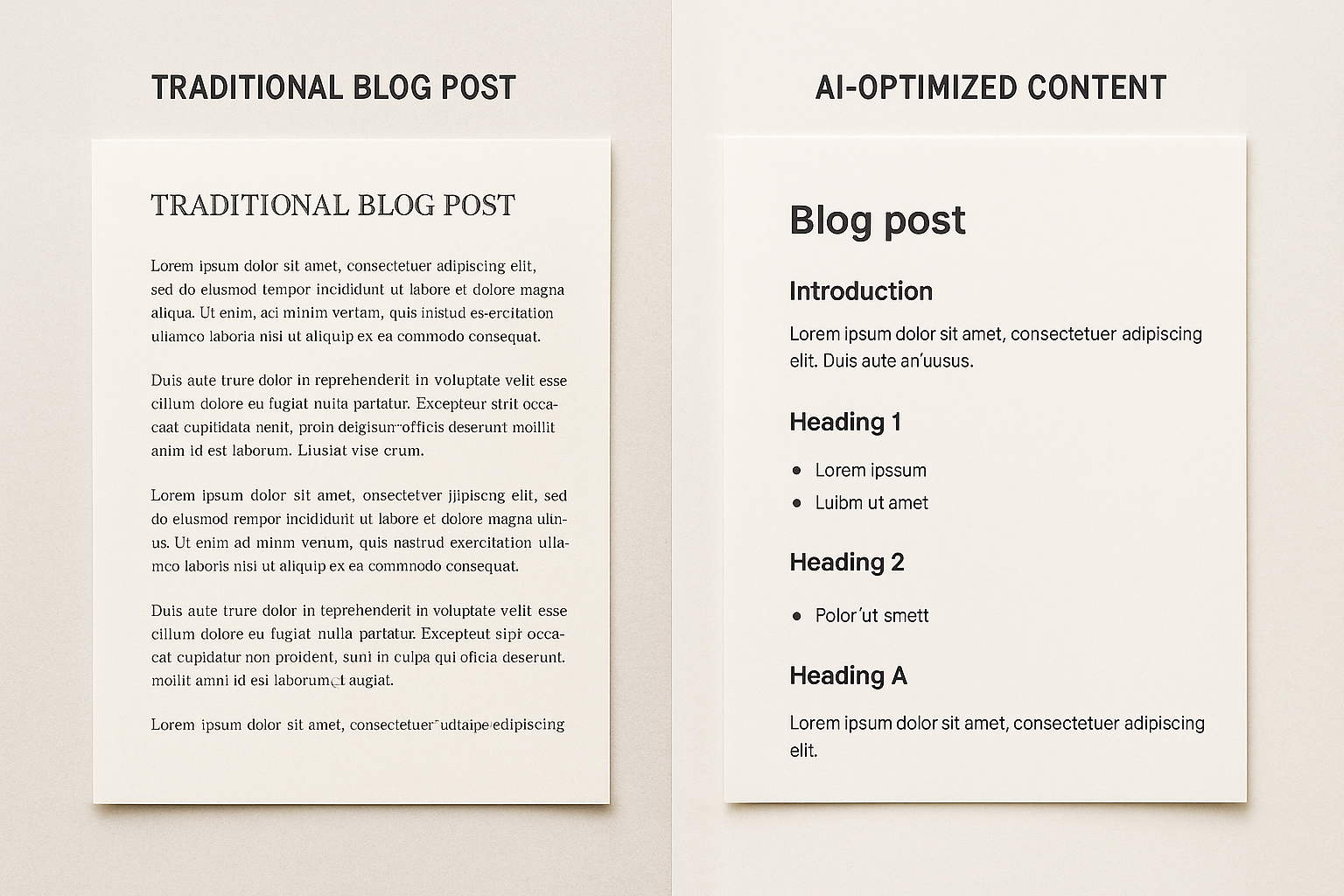
Schema markup, heading hierarchies, and list-based formatting help AI models identify key facts quickly. A page with well-defined H2 and H3 headings that pose direct questions signals to the model which sections contain actionable answers. The model can then extract specific sentences or paragraphs, attribute them to your domain, and present them as part of a synthesized response.
What Role Does Topical Authority Play?
Topical authority signals to AI models that your site consistently publishes credible, interconnected content on a subject. When multiple pages on your domain cover related subtopics with internal links connecting them, language models recognize the site as a specialized resource rather than a one-off article.
Building topical clusters around core subjects increases the likelihood that AI search systems will cite your content across multiple queries. This requires a deliberate content strategy focused on topical authority, where every article strengthens the overall perception of expertise rather than existing in isolation.
Core Elements of ChatGPT SEO Content
Effective ChatGPT SEO content combines semantic clarity, structured data, and direct answers that AI models can extract without ambiguity. Each element serves to make your content machine-readable while preserving the natural flow that human readers expect.
Start every section with a self-contained sentence that directly addresses the heading. This allows AI models to extract a complete answer even if they ignore the rest of the paragraph. Follow that opening sentence with supporting details, examples, or step-by-step instructions that add depth without diluting the core message.
| Content Element | Traditional SEO Role | ChatGPT SEO Role |
|---|---|---|
| Headings | Keyword placement and scannability | Semantic signposts for answer extraction |
| Schema markup | Rich snippets and featured snippets | Explicit context and entity relationships |
| Internal links | PageRank distribution and crawl paths | Topical clustering and authority signals |
| Lists and tables | User experience and engagement | Structured data extraction and factual parsing |
How Should You Structure Headings for AI Parsing?
Structure headings as direct questions that mirror how users phrase queries to AI assistants. When a heading reads "How Should You Structure Headings for AI Parsing?" the model can match it to similar user questions and extract the paragraph below as a precise answer.
Avoid vague headings like "Best Practices" or "Tips and Tricks." Instead, use specific phrasing such as "What Role Does Topical Authority Play?" or "Which Schema Types Improve Citation Rates?" This specificity helps language models align your content with user intent and increases the probability of citation.
ChatGPT SEO Tools and Technology Stack
ChatGPT SEO tools automate the technical work required to prepare content for AI search visibility, including schema generation, semantic analysis, and citation tracking. Platforms designed for AI-first optimization handle structured data markup, topical mapping, and internal link networks at scale.
RankHit, for example, builds content specifically for AI search citation, integrating schema markup, semantic keyword research, and automated publishing workflows. When selecting ChatGPT SEO tools, prioritize those that offer native schema support, topical cluster planning, and real-time citation monitoring.
Which Schema Types Improve Citation Rates?
FAQPage, Article, HowTo, and Speakable schema types provide explicit context that AI models can parse efficiently. FAQPage schema, in particular, packages question-and-answer pairs in a format that aligns perfectly with how language models construct responses.
Article schema with defined author, datePublished, and dateModified fields signals freshness and authority, while HowTo schema breaks instructional content into discrete steps that models can reference individually. Using a schema markup generator ensures consistent implementation across your content library without manual coding errors.
ChatGPT SEO Strategy: Planning for AI Visibility
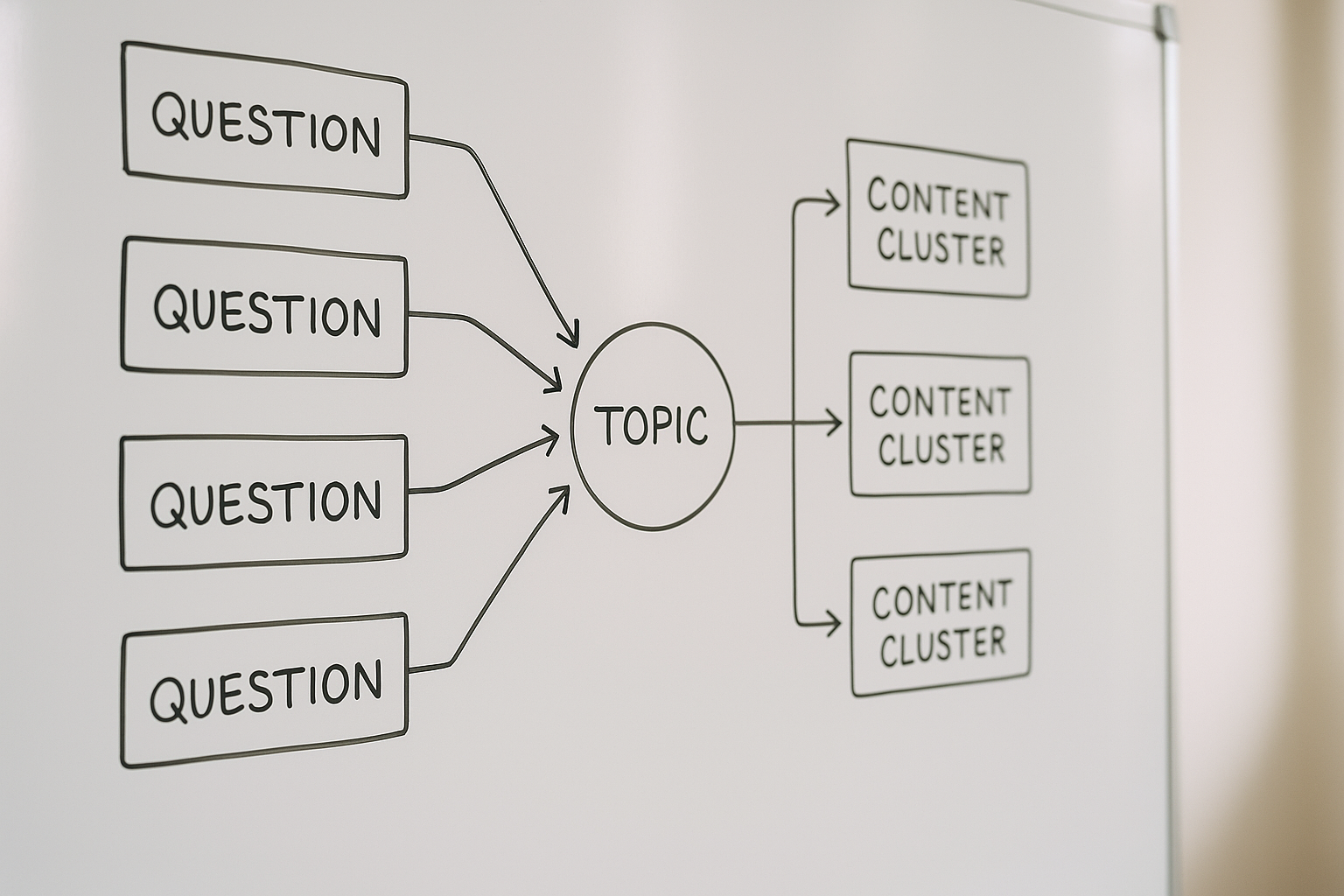
A comprehensive ChatGPT SEO strategy begins with identifying the specific questions your audience asks and mapping content to those queries with precision. Rather than targeting broad keywords, focus on the exact phrasing of questions that AI search users type, then structure your content to deliver complete, self-contained answers.
Document your topical areas, create content clusters that link related articles, and ensure every piece includes both primary answers and supporting context. This approach mirrors how AI models navigate content, moving from a direct answer to deeper exploration through internal links and related subtopics.
How Do You Identify Citation-Worthy Topics?
Citation-worthy topics answer specific, high-intent questions with clear, verifiable information that users frequently ask AI assistants. Analyze query patterns in your niche, look for recurring question structures, and prioritize topics where you can provide definitive, authoritative answers backed by structured data.
Use AI-driven keyword research to uncover question-based queries, then validate that your content can answer those questions in a single, extractable paragraph. Topics that require multi-step explanations, comparisons, or decision frameworks perform especially well because they invite AI models to cite your structured breakdown rather than synthesizing from multiple sources.
ChatGPT SEO Services and Agency Selection
ChatGPT SEO services typically include content audits for AI readability, schema implementation, topical authority planning, and citation tracking across AI platforms. When evaluating a ChatGPT SEO agency, confirm they understand the distinction between traditional ranking optimization and AI-first content structuring.
Ask potential agencies how they measure citation success, what schema types they deploy, and how they structure topical clusters. A qualified ChatGPT SEO agency will demonstrate familiarity with semantic search principles, entity-based SEO, and the specific formatting requirements that language models prioritize during answer generation.
Optimizing Existing Content for ChatGPT SEO
Optimizing existing content for ChatGPT SEO requires restructuring headings into questions, adding schema markup, and rewriting opening sentences to deliver self-contained answers. Start by auditing your highest-traffic pages, identifying sections where a direct answer could be extracted, and reformatting those sections to front-load the most actionable insight.
Add FAQ sections to pages that naturally answer common questions, implement Article or HowTo schema where appropriate, and strengthen internal links to related content. This incremental approach lets you test which changes improve citation rates without overhauling your entire content library at once.
What Content Formats Perform Best for AI Citations?
List-based articles, step-by-step guides, comparison tables, and FAQ-driven content perform best because they present information in discrete, extractable units. AI models can reference individual list items, specific steps, or table rows without needing to paraphrase long paragraphs of prose.
Combine these formats within a single article to maximize citation opportunities across different query types. A single piece can include a comparison table for "which" questions, a numbered list for "how to" queries, and an FAQ section for "what is" or "why" questions, covering multiple intent patterns that AI search users express.
ChatGPT SEO Text: Writing for Dual Audiences
ChatGPT SEO text must satisfy both human readers seeking engaging narratives and AI models parsing for factual density and structure. Write in clear, declarative sentences that state facts before elaborating, avoid passive voice, and use specific terminology that aligns with how users phrase questions.
Every paragraph should contribute a distinct idea or answer a specific sub-question. Avoid padding sentences with generic phrasing, and prioritize concrete details over abstract descriptions. This discipline keeps your content citation-worthy by ensuring every sentence carries extractable value.
Internal Linking for AI Search Authority
Internal linking establishes topical relationships that AI models use to assess the breadth and depth of your expertise. Link from high-level overview articles to detailed subtopic pages, and use descriptive anchor text that includes semantic variations of your target keywords.
When AI models crawl your site, they follow internal links to map the conceptual structure of your content. A well-connected topical cluster signals that your site covers a subject comprehensively, increasing the likelihood that the model will cite multiple pages from your domain when answering related questions. Explore how automated systems build these link networks at scale.
ChatGPT SEO Blog and Publishing Workflow
A ChatGPT SEO blog requires consistent publishing of structured, question-focused content that builds topical authority over time. Plan your editorial calendar around question clusters, ensuring each new article connects to existing content and extends your coverage of core topics.
Automate repetitive tasks like schema generation, internal link suggestions, and publishing schedules to maintain momentum without sacrificing quality. Platforms that offer native publishing capabilities streamline the workflow from keyword research to live article, reducing the time between content creation and AI search visibility.
How Often Should You Publish for AI Search Visibility?
Publish consistently enough to build topical depth without sacrificing content quality, typically two to four comprehensive articles per week for niche sites. AI models favor sites that demonstrate ongoing expertise through regular updates and fresh content, but a single well-structured article outperforms a dozen poorly formatted posts.
Focus on covering all facets of a core topic before moving to unrelated subjects. This clustering approach signals specialization to AI models and increases the probability that your domain becomes the go-to citation source for that topic area, rather than one of many generic alternatives.
ChatGPT SEO WordPress Integration
ChatGPT SEO WordPress optimization leverages plugins and custom configurations to add schema markup, improve heading structure, and automate internal linking within the WordPress environment. Choose plugins that support JSON-LD schema, allow granular control over markup types, and integrate with your existing SEO toolset.
Configure your WordPress theme to enforce a clear heading hierarchy, ensure mobile responsiveness, and optimize page speed, all of which indirectly influence AI citation rates by improving crawlability and user experience signals. Automation tools that publish directly to WordPress while applying AI-optimized formatting save hours of manual configuration per article.
Measuring ChatGPT SEO Success
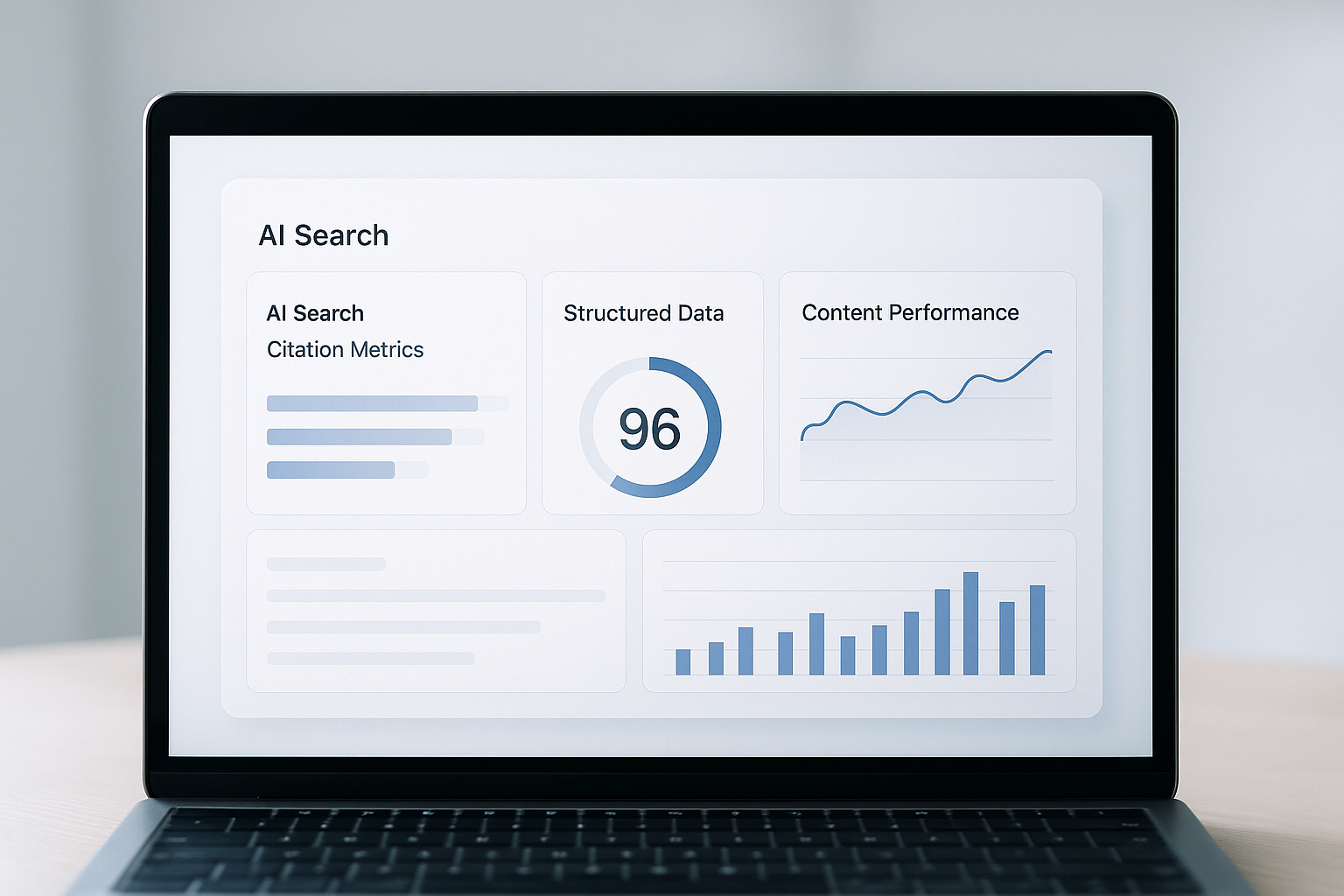
Track ChatGPT SEO success by monitoring citation frequency in AI-generated responses, referral traffic from AI platforms, and improvements in semantic search visibility. Use tools that can detect when your domain appears in ChatGPT responses, Perplexity results, or other AI search interfaces.
Analyze which content formats, schema types, and topical areas generate the most citations, then double down on those approaches. Citation tracking differs from traditional rank tracking because your content may be cited without appearing in a traditional top-ten result, requiring new measurement frameworks that account for AI answer synthesis.
What Metrics Indicate Strong AI Search Performance?
Strong AI search performance shows up in direct traffic spikes from AI platforms, increased brand searches, and higher click-through rates from AI-generated summaries that cite your domain. Monitor referral paths, track unique visitors from AI search interfaces, and measure how citation frequency correlates with overall organic traffic growth.
Secondary indicators include time-on-page increases, lower bounce rates from AI referrals, and improved conversion rates from visitors arriving via AI citations. These users often arrive with higher intent because the AI model has already pre-qualified your content as relevant to their specific query.
Frequently Asked Questions
Does ChatGPT SEO replace traditional SEO?
ChatGPT SEO complements traditional SEO rather than replacing it, as both Google search and AI search systems value authoritative, well-structured content. Optimizing for AI citations strengthens your overall content quality, which benefits traditional search rankings as well.
Can small businesses compete in ChatGPT SEO?
Small businesses can excel in ChatGPT SEO by focusing on niche topics where they possess genuine expertise, since AI models prioritize content quality and specificity over domain size. A focused topical cluster on a narrow subject often outperforms generic coverage of broad topics.
How long does it take to see ChatGPT SEO results?
Most sites see initial citation activity within four to eight weeks of implementing structured content and schema markup, with sustained growth occurring as topical authority builds over three to six months. Consistent publishing and continuous optimization accelerate this timeline.
Getting your content cited by ChatGPT and other AI search systems requires a fundamental commitment to clarity, structure, and topical authority. By implementing the core principles covered in this guide, focusing on question-driven content, deploying schema markup, and building interconnected topical clusters, you position your site as a trusted source that AI models turn to when synthesizing answers. Start by auditing your existing content, reformatting high-priority pages with AI-readable structure, and gradually expanding your coverage within your core expertise areas to establish lasting citation authority.

RankHit
RankHit official
RankHit researches keywords, writes SEO articles, and publishes them on autopilot so brands can rank on Google and get cited by ChatGPT.