AI Blog Writer Comparison: HubSpot, Reddit Favorites & Free Options
Compare the best AI blog writers including HubSpot, Reddit community favorites, and free tools with image generation in this 2026 comparison guide.

Choosing the right AI blog writer requires understanding how different platforms stack up on features, pricing, and real-world performance. In 2026, the landscape includes established enterprise solutions like HubSpot, community-vetted Reddit favorites, and surprisingly capable free alternatives that now include image generation capabilities.
This comparison breaks down the core differences between commercial AI blog writer tools and free options, with specific attention to SEO optimization, workflow automation, and the integration features that separate basic text generation from complete content production systems.
What Makes an AI Blog Writer Tool Effective in 2026?
An effective AI blog writer tool delivers three integrated capabilities: SEO-aware content generation that targets specific keywords with natural density, workflow automation that reduces manual editing cycles, and publishing integration that moves content from draft to live without copy-paste steps. Tools that excel in only one area create bottlenecks elsewhere in your content pipeline.
The gap between basic AI writing assistants and specialized SEO AI blog writer platforms lies in structured data implementation, internal linking logic, and the ability to generate content that search engines and AI answer engines can parse for citations. Generic writing tools produce fluent text but lack the schema markup, heading hierarchy, and keyword targeting patterns that drive organic visibility.
HubSpot AI Blog Writer: Enterprise Features and Limitations
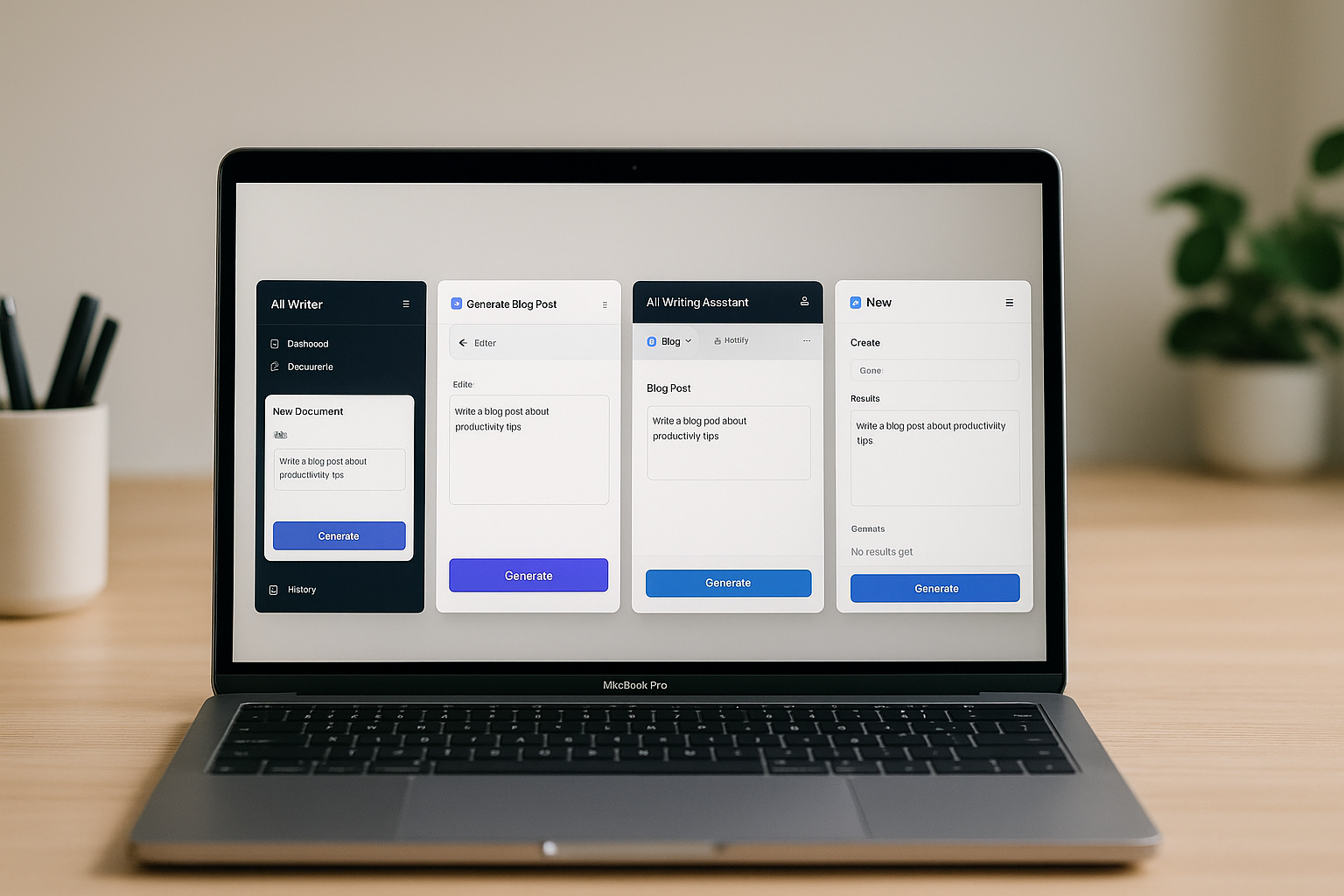
The HubSpot AI blog writer integrates directly with HubSpot CMS and CRM, allowing content teams to generate drafts that inherit contact data and campaign context from existing workflows. This tight integration means blogs can reference lead segments, personalize calls to action based on lifecycle stage, and track content performance alongside broader marketing metrics without switching platforms.
However, HubSpot's AI content assistant requires an active Marketing Hub Professional or Enterprise subscription, positioning it as an add-on for businesses already invested in the HubSpot ecosystem rather than a standalone AI blog writer tool. The assistant excels at short-form content and social posts but struggles with long-form SEO articles exceeding 1,500 words, often requiring significant manual expansion and keyword optimization to meet search intent.
What Are the Pricing Realities of HubSpot AI Content Tools?
HubSpot AI content tools are bundled into Marketing Hub tiers starting at several hundred dollars per month, with no standalone AI blog writer free option available. For small businesses and startups testing content automation, this represents a significant fixed cost before generating the first published article, especially when compared to usage-based pricing models that scale with actual content volume.
How Does HubSpot Handle SEO Optimization for Blog Content?
HubSpot's SEO recommendations appear as sidebar suggestions during content creation, flagging missing meta descriptions, low keyword usage, and readability issues. The system does not automatically inject structured data or generate schema markup for FAQ sections, leaving those tasks to manual implementation or third-party plugins, which creates additional steps for teams targeting featured snippets and AI citations.
AI Blog Writer Reddit: What the Community Actually Recommends
Reddit discussions in subreddits like r/SEO, r/content_marketing, and r/SaaS consistently surface a core set of AI blog writer tools praised for specific use cases rather than universal excellence. The community distinguishes between tools that generate first drafts quickly and platforms that deliver publication-ready content with minimal editing, with the latter group receiving higher satisfaction scores from users managing content at scale.
Jasper, Copy.ai, and Writesonic appear frequently in Reddit threads, often praised for template variety and brand voice customization. However, recurring criticisms focus on the need for extensive post-generation editing to achieve natural keyword integration and factual accuracy, particularly for technical or data-driven topics where AI hallucination risks are higher.
Which Free AI Blog Writer Tools Do Reddit Users Trust?
Reddit users frequently mention ChatGPT free tier, Google Gemini, and Claude as viable AI blog writer free online options, noting that custom prompts can replicate many paid tool features. The trade-off involves manual prompt engineering, lack of SEO keyword tracking, and the absence of publishing integrations, which means every article requires copy-paste steps and separate optimization in a CMS or SEO plugin.
What Are the Most Common Complaints About Popular AI Blog Writers on Reddit?
The most common complaint across AI blog writer Reddit threads centers on repetitive phrasing and formulaic structure that makes content feel machine-generated. Users report that many tools default to listicle formats and generic introductions regardless of topic, requiring manual rewriting to establish a distinct voice and avoid the flat tone that both readers and search engines now associate with low-effort AI content.
Best AI Blog Writer for SEO: Feature Comparison
The best AI blog writer for SEO integrates keyword research, content generation, and technical optimization into a single workflow rather than treating each as a separate manual step. Platforms like RankHit automate keyword targeting, internal link suggestions, and schema markup generation, reducing the time from topic selection to published article while maintaining the structured data that AI search engines require for citations.
| Feature | HubSpot AI | Reddit Favorites | RankHit | Free Tools |
|---|---|---|---|---|
| SEO Keyword Targeting | Manual input required | Varies by tool | Automated research and targeting | Manual prompt engineering |
| Internal Linking | Manual insertion | Manual insertion | Automated suggestions | Manual insertion |
| Schema Markup | Third-party plugins needed | Not included | Auto-generated FAQ schema | Manual coding required |
| Publishing Integration | HubSpot CMS only | Limited API connections | WordPress, Webflow, Shopify | None (manual copy-paste) |
| Image Generation | Not included | Some tools offer add-ons | Included with prompts | Separate tools required |
This comparison reveals that enterprise platforms prioritize CRM integration over standalone SEO features, while specialized SEO AI blog writer platforms focus on the technical optimizations that directly impact search visibility and AI answer engine citation rates.
AI Blog Writer with Images: Why Visual Integration Matters
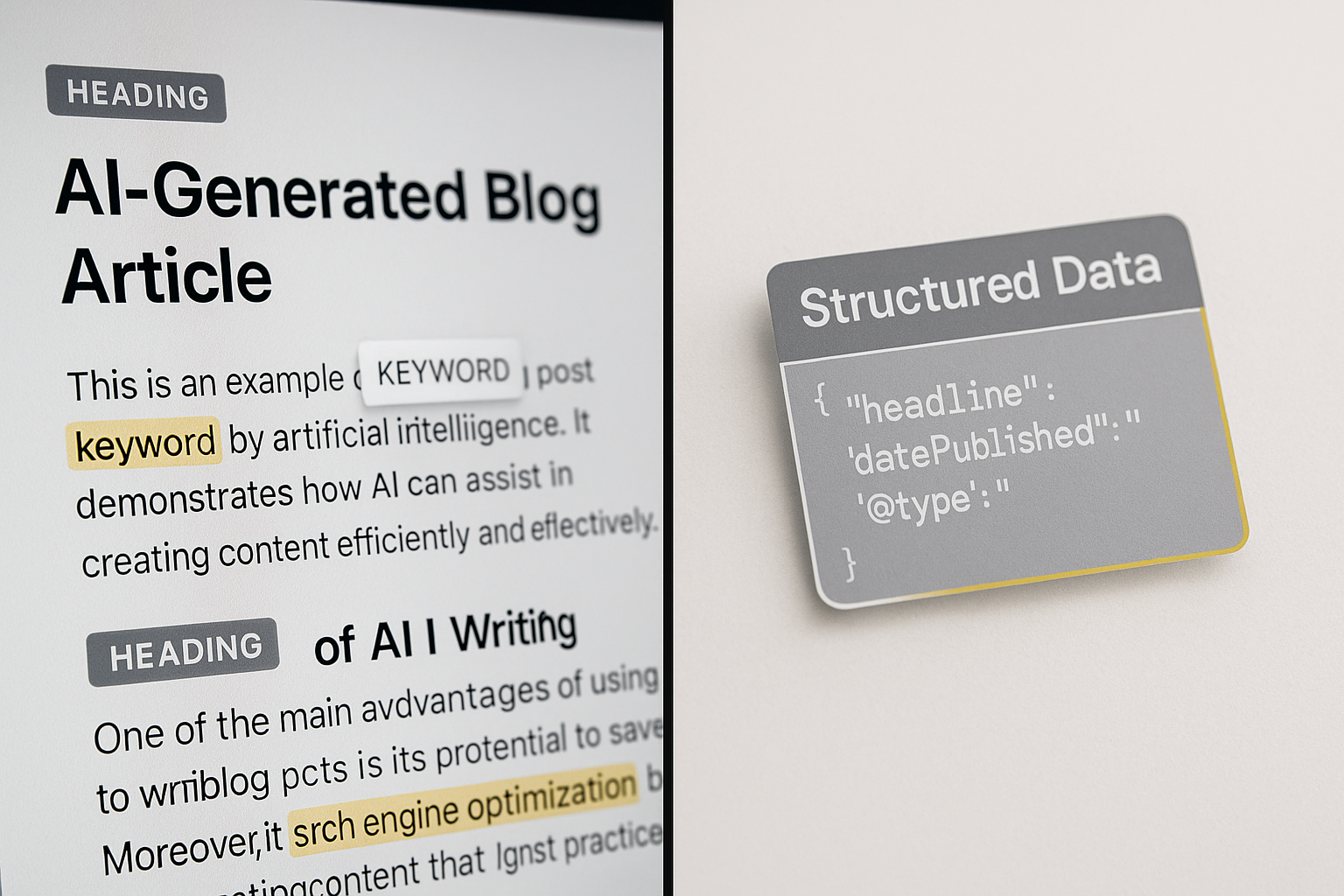
An AI blog writer with images eliminates the workflow friction of sourcing stock photos, managing licensing, and manually inserting visuals into content drafts. Integrated image generation ensures every article publishes with contextually relevant visuals that reinforce key points, improve time-on-page metrics, and satisfy the multimedia expectations of both readers and search algorithms evaluating content quality.
Platforms that generate images during content creation use article context to produce visuals tied to specific sections, avoiding the generic stock photo aesthetic that signals low-effort content. For comparison articles, product reviews, and tutorial content, this context-aware approach produces diagrams, interface mockups, and process illustrations that generic image libraries cannot match without extensive custom editing.
How Do Free AI Blog Writer with Images Tools Compare to Paid Options?
Free AI blog writer with images free tools typically separate text generation and image creation into distinct workflows, requiring users to generate text in one interface, switch to an image generator, craft prompts manually, download files, and insert them into content. Paid platforms automate this sequence, generating images inline with content sections and maintaining filename conventions and alt text that support SEO without additional manual steps.
Free vs. Paid AI Blog Writer Tools: Total Cost of Ownership
Evaluating the true cost of an AI blog writer free online tool requires accounting for time spent on manual optimization, editing cycles, and publishing steps that paid platforms automate. A free tool that produces a 1,500-word draft in five minutes but requires 45 minutes of keyword optimization, internal linking, and schema markup implementation delivers lower effective productivity than a paid platform that publishes optimized content in 20 total minutes.
For content teams producing fewer than 10 articles per month, free tools combined with manual SEO workflows remain cost-effective. Beyond that threshold, the cumulative hours spent on post-generation optimization typically exceed the subscription cost of specialized platforms, particularly when factoring in the opportunity cost of content volume forgone due to manual bottlenecks.
What Hidden Costs Do Free AI Blog Writer Tools Carry?
Hidden costs of free AI blog writer tools include time spent managing separate subscriptions for keyword research, schema generators, and image tools, plus the cognitive overhead of context-switching between platforms during each article workflow. Additionally, free tools lack usage analytics that show which content drives traffic, forcing teams to rely on separate analytics platforms and manual correlation to optimize future topic selection.
How to Evaluate AI Blog Writer Tool Quality Before Committing
Test any AI blog writer tool by generating three articles on topics central to your niche, then measure keyword density, readability scores, and the time required to bring each draft to publication quality. Tools that consistently produce content requiring extensive rewriting or fail to incorporate target keywords naturally signal misalignment with SEO-focused workflows, regardless of feature lists or marketing claims.
Request sample outputs or trial access to evaluate tone consistency, factual accuracy for your industry, and whether the tool can maintain context across long-form content exceeding 2,000 words. Many AI blog writer platforms produce strong introductions but degrade in quality or become repetitive in later sections, a pattern only visible through full-length testing rather than short demo examples.
Which Quality Metrics Matter Most for SEO-Focused Content?
For SEO-focused content, prioritize tools that demonstrate consistent keyword density between 0.4 and 0.5 percent without keyword stuffing, generate proper heading hierarchy with H2 and H3 tags, and include structured data markup that search engines can parse. Tools that produce content requiring manual restructuring to meet these technical requirements create bottlenecks that negate the speed advantages of AI generation.

Specialized Use Cases: When to Choose Each AI Blog Writer Type
Enterprise marketing teams already using HubSpot for CRM and email automation benefit most from the HubSpot AI blog writer, as the unified data model enables personalization and attribution tracking that standalone tools cannot replicate. The premium cost aligns with broader platform value when content directly supports lead nurturing campaigns tracked in the same system.
Startups and small businesses prioritizing organic traffic growth over CRM integration should evaluate specialized SEO AI blog writer platforms that automate keyword research, internal linking, and publishing. RankHit fits this profile by combining content generation with automated SEO optimization and direct publishing to WordPress, Webflow, and Shopify, reducing the content-to-publish cycle to minutes rather than hours.
When Does a Free AI Blog Writer Tool Make Strategic Sense?
A free AI blog writer tool makes strategic sense during initial content experimentation, when testing different content formats or topics before committing to a consistent publishing schedule. Once a content strategy proves effective and volume targets exceed 8-10 articles monthly, the manual optimization overhead of free tools typically justifies transitioning to a paid platform with integrated SEO features and publishing automation.
Integration Capabilities: Publishing and Workflow Automation
Publishing integration separates AI blog writer tools that accelerate entire content workflows from those that only speed initial draft creation. Native WordPress publishing, for example, allows teams to generate and publish content without leaving the platform, automatically applying category tags, featured images, and meta descriptions while preserving custom fields and SEO plugin data.
Tools without CMS integration force manual copy-paste steps that reintroduce human error, formatting inconsistencies, and forgotten optimization elements like alt text or canonical tags. For teams managing multiple websites or clients, this manual step multiplies across every article and every site, creating a scaling ceiling that integration-focused platforms eliminate. Explore how automated publishing workflows reduce time-to-publish and maintain consistency across high-volume content operations.
What Publishing Platforms Should Your AI Blog Writer Support?
Your AI blog writer tool should support the CMS platforms your websites currently use, with WordPress integration being essential for the majority of content sites. Webflow and Shopify integrations matter for ecommerce and design-focused sites, while headless CMS support via API becomes important for technical teams using custom publishing stacks or managing content across multiple channels from a central repository.
AI Answer Engine Optimization: Citation-Ready Content
Content optimized for AI answer engines like ChatGPT, Perplexity, and Google SGE requires structured data markup, clear heading hierarchy, and direct-answer formatting that LLMs can parse and cite. Traditional SEO AI blog writer tools focus on ranking in search results, while citation-optimized platforms structure content specifically for extraction and attribution by AI systems that synthesize answers from multiple sources.
RankHit builds content with FAQ schema, concise answer paragraphs immediately following question headings, and the semantic structure that AI models use to identify authoritative source material. This approach positions content for dual visibility: traditional Google rankings and citations within AI-generated answers, capturing traffic from both search paradigms as user behavior shifts toward conversational AI interfaces. Learn more about building content for AI search citations and the structural patterns that increase attribution rates.
How Does Schema Markup Improve AI Citation Rates?
Schema markup improves AI citation rates by providing explicit semantic signals that help language models identify question-answer pairs, key facts, and authoritative claims within your content. FAQ schema in particular allows AI systems to extract structured Q&A content with high confidence, increasing the likelihood your content appears as a cited source when users ask related questions in ChatGPT or other AI assistants.
Content Quality and Originality: Avoiding AI Detection Penalties
Search engines in 2026 evaluate content quality based on originality, depth, and user value rather than simply detecting AI authorship. However, AI-generated content that exhibits repetitive phrasing, shallow treatment of topics, or factual errors faces ranking penalties regardless of its production method. The best AI blog writer platforms mitigate these risks through varied sentence structures, fact-checking integrations, and content templates that avoid the formulaic patterns associated with low-quality automation.
Originality stems from unique insights, specific examples, and perspectives that synthesize information rather than merely summarizing it. Tools that support custom knowledge bases, brand voice training, and industry-specific terminology produce content that reads as informed analysis rather than generic overviews, reducing both AI detection risk and the more fundamental issue of failing to provide differentiated value to readers.
| Quality Factor | Low-Quality AI Content | High-Quality AI Content |
|---|---|---|
| Opening Style | Generic scene-setting phrases | Specific claim or data point first |
| Sentence Variety | Repetitive structure and length | Varied rhythm and complexity |
| Example Specificity | Vague hypotheticals | Industry-specific scenarios |
| Keyword Integration | Forced or clustered placement | Natural distribution throughout |
| Factual Claims | Unsupported generalizations | Verifiable statements with context |
Frequently Asked Questions About AI Blog Writers
What is the best AI blog writer for small businesses with limited budgets?
The best AI blog writer for small businesses balances automation depth with cost-effectiveness, typically landing in the specialized SEO platform category rather than enterprise suites or bare-bones free tools. Platforms offering integrated keyword research, publishing automation, and usage-based pricing provide better ROI than per-seat enterprise licenses or free tools requiring extensive manual optimization time.
Can free AI blog writer tools produce SEO-optimized content?
Free AI blog writer tools can produce SEO-optimized content when paired with careful prompt engineering, manual keyword insertion, and separate optimization tools for schema markup and meta tags. However, achieving consistent optimization across multiple articles requires significantly more time per piece compared to integrated platforms that automate these technical elements, making free tools better suited for low-volume content strategies.
How does HubSpot AI blog writer compare to standalone SEO tools?
HubSpot AI blog writer excels at CRM integration and campaign attribution but lacks the automated SEO depth of standalone tools built specifically for organic traffic growth. Businesses prioritizing lead nurturing and marketing automation benefit from HubSpot's unified data model, while those focused primarily on scaling organic visibility through high-volume content find better value in specialized SEO AI blog writer platforms with native publishing and schema automation.
Which AI blog writer tools include built-in image generation?
AI blog writer tools with built-in image generation include platforms that integrate DALL-E, Midjourney, or Stable Diffusion APIs directly into content workflows, generating contextually relevant visuals during article creation rather than requiring separate tools. RankHit and similar specialized platforms offer this integration, while enterprise tools like HubSpot typically require separate image sourcing or third-party plugin additions.
What do Reddit users say is the biggest weakness of popular AI blog writers?
Reddit users consistently identify repetitive structure and generic tone as the biggest weakness of popular AI blog writers, noting that many tools produce content that feels formulaic regardless of topic or industry. This pattern forces significant editing time to establish distinct voice and avoid the machine-generated aesthetic that both readers and search algorithms increasingly associate with low-value content, partially negating the speed advantages that initially attract users to AI writing tools.
Making the Right Choice for Your Content Strategy
Selecting the right AI blog writer requires aligning tool capabilities with your specific content goals, technical requirements, and scale targets. Enterprise teams benefit from platforms integrated with existing marketing stacks, even at premium pricing, while growth-focused startups prioritize SEO automation and publishing integration that maximize content velocity without proportional increases in manual labor.
Test multiple platforms with real articles from your content roadmap before committing to annual contracts, measuring time-to-publish, keyword optimization quality, and the depth of editing required to reach publication standards. The best AI blog writer tool for your business delivers consistent output quality at a cost structure that aligns with your current content volume and growth trajectory, whether that means free tools with manual workflows, mid-tier specialized platforms, or enterprise suites with comprehensive marketing integration.
For businesses serious about scaling organic visibility through AI-optimized content, explore how automated SEO content workflows eliminate manual optimization bottlenecks, or review how AI SEO automation works in practice. When content volume targets exceed 10-15 articles monthly, integrated platforms that handle keyword research, generation, optimization, and publishing in a single workflow consistently outperform pieced-together tool stacks on both speed and quality metrics. Visit the AI content brief generator to experience how structured planning improves output quality across any AI blog writer platform you choose.

RankHit
RankHit official
RankHit researches keywords, writes SEO articles, and publishes them on autopilot so brands can rank on Google and get cited by ChatGPT.