SEO Autopilot Software for Small Business: Is It Right for You?
Evaluate if SEO autopilot software fits your small business needs with this decision framework, covering costs, control tradeoffs, and ROI timelines.

Small business owners face a specific challenge: limited time and budget for SEO, yet high stakes for every dollar spent on marketing technology. SEO autopilot software for small business promises to solve this by handling keyword research, content creation, internal linking, and publishing without constant manual oversight, but the decision to adopt it hinges on whether your specific circumstances align with what automation delivers versus what it cannot yet replace.
What Does SEO Autopilot Software Actually Automate?
SEO autopilot software for small business automates the entire content pipeline, from discovering keywords your audience searches for, through generating optimized articles, to scheduling publication on your website without you touching the CMS. The core automation typically includes keyword clustering to identify topic opportunities, AI-driven article generation that follows on-page SEO best practices, internal link insertion based on topical relevance, and direct publishing via API connections to platforms like WordPress or headless CMS systems.
This differs from traditional SEO tools that surface recommendations you then execute manually. Autopilot platforms close the loop by acting on the recommendations themselves, turning insights into published assets. For a small business juggling customer service, operations, and sales, this shift from recommendation to execution is where the value proposition lives.
Which Tasks Remain Manual Even With Automation?
Even the most sophisticated SEO autopilot software for small business leaves strategic decisions and certain content types to you. Automation handles informational blog posts well but struggles with service pages, product descriptions that require specific technical specs, or testimonials that need real customer voices. You still define your brand positioning, approve the initial keyword strategy, and determine which content angles align with your business goals rather than just search volume.
Editorial oversight remains your responsibility: reviewing AI-generated drafts for factual accuracy, ensuring tone consistency with your brand, and catching any generic phrasing that does not reflect your unique value proposition. Autopilot software accelerates production but does not replace the judgment calls that differentiate your content from a competitor targeting the same keywords.
How Much Does SEO Autopilot Software Cost for Small Businesses?
Pricing for SEO autopilot software for small business typically ranges from $99 to $499 per month, with variations based on monthly article quota, keyword volume limits, and whether direct publishing is included or restricted to export-only tiers. Entry-level plans usually bundle 8 to 20 articles per month, enough for a consistent weekly or bi-weekly publishing cadence, while mid-tier plans push into 30 to 50 articles to support more aggressive topical authority strategies.
Annual commitments often bring 15 to 20 percent discounts, but evaluate carefully whether you will need the service for that duration before locking in. Add-ons such as advanced schema markup generation, multilingual content, or priority support can push the effective monthly cost higher. Compare this to hiring a freelance SEO writer at $100 to $300 per article: if your plan includes 20 articles monthly at $299, that is roughly $15 per article, a fraction of manual production costs but with the tradeoff of less customization per piece.

What Hidden Costs Should You Factor In?
Hidden costs include the time required for initial setup, such as connecting your CMS, uploading brand guidelines, and reviewing the first batch of content to calibrate quality expectations. Expect to invest 4 to 8 hours in the first two weeks, then 1 to 2 hours per week for ongoing quality checks and keyword strategy adjustments. If your website lacks technical SEO foundations like fast page speed, mobile responsiveness, or proper schema markup, automation alone will not compensate, and you may need to budget separately for technical fixes.
Another often-overlooked cost is content refresh: autopilot software excels at new article creation but older posts still need periodic updates to maintain rankings. Budget time or additional spend for quarterly audits of existing content performance, a task that remains manual even with automation in place.
Decision Framework: Is Autopilot Software Right for Your Business?
Use this structured framework to evaluate fit: first, assess your content velocity need versus your current capacity, then weigh control tolerance, and finally calculate break-even timelines against available cash flow. Each dimension addresses a different failure mode, so a green light on all three is the threshold for adoption rather than enthusiasm about any single benefit.
| Evaluation Criteria | Green Light Signal | Red Flag Signal |
|---|---|---|
| Monthly content output goal | 12+ articles per month needed | Fewer than 4 articles per month |
| Internal writing resources | No dedicated writer or freelance budget under $500/month | Full-time content team already in place |
| Content type priority | Informational blog posts, how-tos, comparisons | Product pages, landing pages, case studies |
| SEO maturity level | Basic site structure, willing to learn best practices | Zero SEO knowledge, unwilling to invest learning time |
| Cash flow runway | Can sustain 6+ months before ROI breakeven | Need immediate traffic or revenue within 60 days |
How Do You Measure Control Tolerance?
Control tolerance means your comfort with algorithm-driven decisions on keyword selection, article structure, and internal linking patterns rather than hand-picking every choice yourself. High control tolerance fits founders who trust systems and measure outcomes, not inputs: you care that organic traffic grows 30 percent quarter-over-quarter but do not need to approve every heading or keyword variant. Low control tolerance fits businesses where brand voice nuance is mission-critical, such as legal practices or luxury goods where a single off-tone sentence damages trust.
Test your tolerance by running a pilot with 5 to 10 articles before committing to annual pricing. If you find yourself rewriting more than 40 percent of the AI-generated content to match your standards, automation may cost more time than it saves, and a hybrid model with human writers using AI content brief generators might serve you better.
What ROI Timeline Should Small Businesses Expect?
Realistic ROI timelines for SEO autopilot software for small business span 4 to 9 months from first publish to measurable traffic gains and 6 to 12 months to revenue attribution, driven by Google's indexing speed, domain authority, and competition in your niche. New domains or sites with fewer than 50 existing pages skew toward the longer end, while established sites with existing authority and backlink profiles see traction faster.
Early indicators appear sooner: expect to see indexed pages climb within 2 to 4 weeks, impressions in Google Search Console rise by month two, and click-through from organic search by month three. These leading metrics confirm the system is working even before revenue or lead conversions materialize. Track cost per lead or customer acquisition cost monthly so you know the moment ROI crosses into positive territory rather than waiting for a vague sense of success.

Can You Accelerate Time to Value?
Accelerating time to value requires front-loading effort in three areas: technical SEO hygiene, keyword targeting precision, and internal linking depth. Fix site speed and mobile usability issues before your first automated article goes live, since Google evaluates content within the context of overall site quality. Use keyword research to target long-tail queries with lower competition rather than broad terms where established competitors dominate, and configure your autopilot software to prioritize internal linking between new articles and existing high-authority pages to pass link equity faster.
Another acceleration tactic is publishing frequency: moving from 8 to 20 articles per month shortens the time to topical authority, the point where Google recognizes your site as a comprehensive resource on a subject cluster. This requires a higher-tier plan but compresses the ROI timeline by demonstrating expertise faster than competitors publishing sporadically.
How Does Automation Affect Content Quality Perception?
Content quality perception hinges on whether readers and search engines detect generic patterns, factual gaps, or tone inconsistency, all of which are risks with unchecked automation but avoidable with proper configuration and oversight. High-quality SEO autopilot software for small business uses retrieval-augmented generation to ground outputs in current data rather than outdated training sets, and applies brand voice templates you define during setup to maintain consistency across articles.
Google's helpful content guidelines penalize content created primarily for search engines rather than users, but automation itself is not the disqualifying factor: shallow, keyword-stuffed articles fail whether human or AI wrote them, while comprehensive, user-focused pieces rank well regardless of authorship method. The practical implication is that you must configure your autopilot software with depth targets, such as minimum word counts, required subsections for how-to queries, and competitor content analysis to ensure your automated output matches or exceeds what ranks today.
What Quality Safeguards Should You Implement?
Implement a three-layer quality safeguard: automated checks built into the software, spot reviews of published content, and performance monitoring tied to user engagement metrics. Configure automated checks for readability score thresholds, keyword density limits to avoid over-optimization, and plagiarism detection to catch any training data leakage. Spot-review 10 to 20 percent of published articles weekly, rotating through different topic clusters to catch systematic issues rather than random errors.
Monitor user engagement metrics like average session duration, bounce rate, and pages per session in Google Analytics, segmented by traffic source. If organic visitors from automated content show materially worse engagement than manually written pages, that signals a quality gap requiring either tighter configuration or a shift toward hybrid workflows where automation drafts and humans refine.
How Does Autopilot Software Integrate With Existing Marketing Stacks?
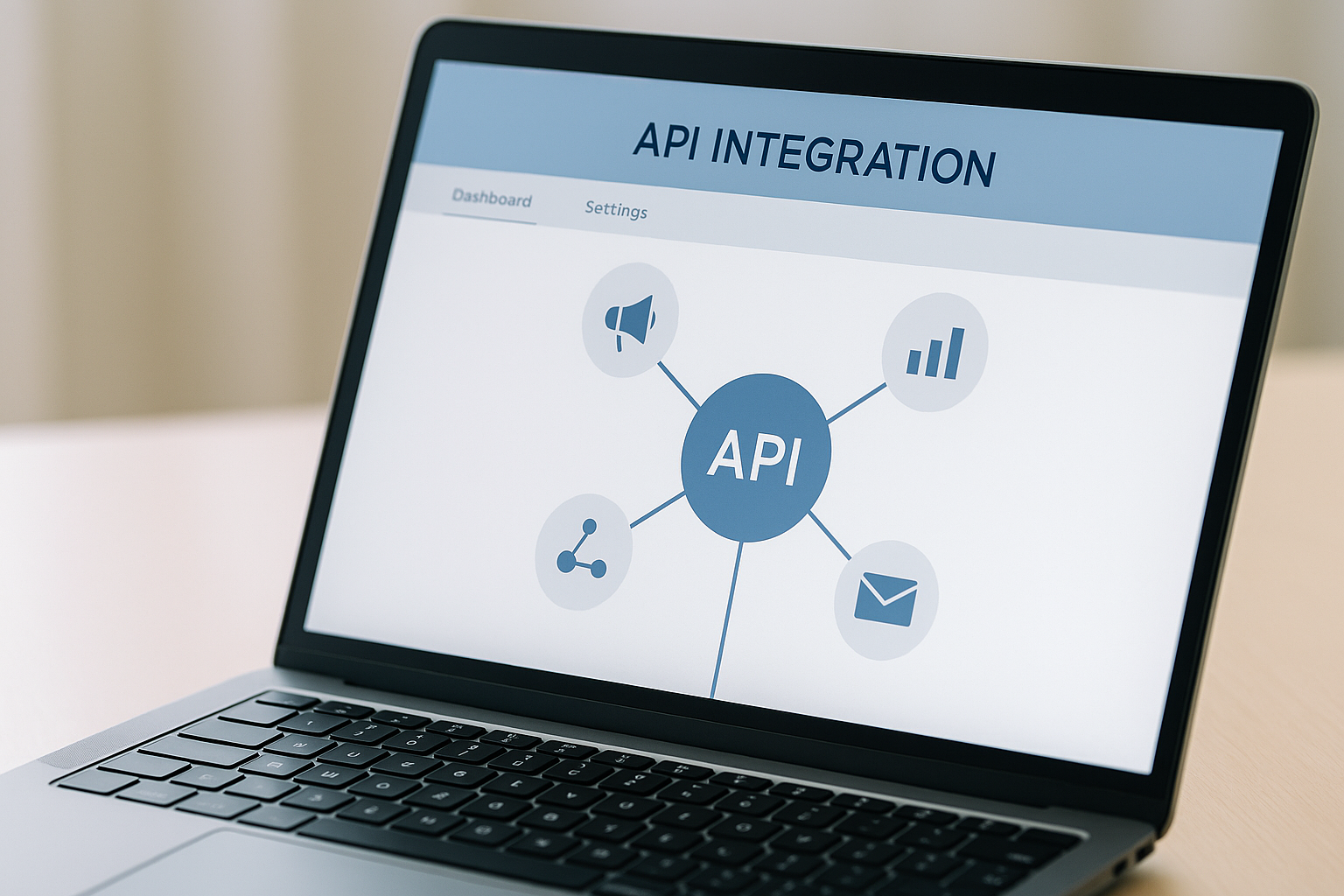
Integration capabilities determine whether SEO autopilot software for small business fits seamlessly into your workflow or creates data silos that require manual reconciliation. Look for native publishing connections to your CMS (WordPress, Webflow, Shopify, headless options), API access for custom workflows, and webhook support to trigger downstream actions like social media posts or email notifications when new content goes live.
Analytics integration is equally critical: the platform should push metadata to Google Search Console and Google Analytics so you can track performance without switching dashboards, and ideally surface keyword rankings and competitor movement inside the same interface where you manage publishing. CRM integration, while less common, enables tagging leads by the content piece they converted from, closing the loop between SEO investment and revenue attribution.
What Happens If You Need to Switch Platforms Later?
Switching costs include content migration effort, loss of historical performance data tied to the old platform, and potential SEO disruption if internal links break during the transition. Mitigate this risk upfront by choosing SEO autopilot software for small business that publishes directly to your CMS rather than hosting content on their domain, so you retain full ownership and portability. Verify that the platform exports keyword lists, content calendars, and performance reports in standard formats like CSV or JSON rather than proprietary file types.
Before committing, ask the vendor about their offboarding process and whether they provide migration assistance or documentation. Platforms confident in their retention do not make leaving difficult, while aggressive lock-in tactics such as content deletion upon cancellation or restricted export quotas signal future friction worth avoiding.
When Should Small Businesses Avoid Autopilot Software?
Small businesses should avoid SEO autopilot software for small business when their competitive advantage depends on proprietary insights, highly technical subject matter expertise, or real-time content tied to breaking news or local events. Examples include law firms where incorrect legal interpretations carry liability, medical practices where health information must meet strict accuracy standards, or local service businesses whose content strategy centers on hyper-local news and community involvement that AI cannot authentically replicate.
Another avoidance scenario is when your website suffers from technical SEO issues severe enough that no amount of content will drive rankings, such as widespread crawl errors, duplicate content across domains, or manual penalties from Google. Fix foundational problems first using tools like a robots.txt tester or canonical tag checker, then evaluate automation once your site meets baseline quality standards.
Is There a Hybrid Approach That Works Better?
A hybrid approach combines autopilot software for high-volume, lower-stakes content like FAQ pages, glossary terms, and how-to guides, while reserving manual writing for cornerstone content, case studies, and thought leadership pieces that define your brand. This maximizes cost efficiency on commodity content where automation excels, freeing budget and time for the high-impact pieces where human creativity and expertise create differentiation.
In practice, this might mean using automation to publish 15 supporting articles per month that build topical authority around a subject cluster, then investing 8 to 12 hours of human writing time on one comprehensive pillar page that links to those supporting pieces. The automated content drives long-tail traffic and establishes expertise signals, while the pillar page competes for high-volume head terms and earns backlinks that lift the entire cluster.
How Do You Configure Autopilot Software for Best Results?
Configuration starts with defining your target audience in specific terms: demographics, search intent patterns, pain points, and the language they use to describe problems rather than industry jargon. Upload existing high-performing content as reference examples so the AI learns your brand voice, preferred article structure, and depth expectations. Set keyword parameters that balance search volume with competition, typically targeting queries with 100 to 1,000 monthly searches where you have a realistic chance to rank within six months.
Internal linking rules should connect new articles to existing authority pages and cluster related topics together, a configuration that platforms like RankHit handle automatically by analyzing topical relationships. Schedule publishing frequency to match your capacity for quality checks: if you can review only 5 articles per week, configure a Monday-Wednesday-Friday cadence rather than overwhelming yourself with daily posts you cannot validate before they go live.
What Mistakes Do Small Businesses Make During Setup?
The most common setup mistake is skipping brand voice calibration and accepting default tone settings, which produces generic content indistinguishable from competitors using the same software. Another frequent error is targeting overly broad keywords that established enterprises dominate, leading to published articles that never rank and wasted quota. Small businesses also underestimate the importance of internal linking configuration, leaving the system to guess at relationships rather than explicitly mapping topic clusters and pillar pages.
A subtler mistake is configuring publishing frequency based on plan limits rather than review capacity, publishing 30 articles monthly because the plan allows it even though you can only quality-check 10, which degrades average content quality and risks algorithm penalties. Start conservative, prove you can maintain quality at that pace, then scale up rather than maxing out immediately.
Frequently Asked Questions
How long does it take to set up SEO autopilot software for a small business?
Initial setup takes 4 to 8 hours spread over one to two weeks, including CMS connection, brand voice calibration, keyword research upload, and reviewing the first batch of content to refine settings. Ongoing management requires 1 to 2 hours per week for quality checks and strategy adjustments once the system is tuned.
Can SEO autopilot software replace a full-time content writer?
SEO autopilot software for small business can replace the production capacity of a full-time writer for informational blog content but not the strategic thinking, brand storytelling, or specialized expertise a senior writer provides. It works best as a supplement that handles volume while you or a writer focus on high-impact cornerstone content and strategic planning.
Will Google penalize my site for using AI-generated content?
Google does not penalize content solely because AI generated it but does penalize low-quality, unhelpful content created primarily to manipulate rankings regardless of authorship method. Focus on depth, accuracy, user intent alignment, and proper configuration with oversight rather than worrying about the tool itself as a ranking factor.
What metrics should I track to measure autopilot software success?
Track indexed pages, organic impressions and clicks in Google Search Console, keyword ranking positions for target terms, average session duration and bounce rate segmented by content source, and ultimately cost per lead or customer acquisition cost attributed to organic traffic. Leading indicators appear within 2 to 4 weeks while revenue metrics take 6 to 12 months.
Should I choose monthly or annual billing for SEO autopilot software?
Choose monthly billing for your first 3 to 6 months to validate fit and quality before committing to annual pricing, even though annual plans offer 15 to 20 percent discounts. Once you confirm the ROI trajectory and are confident in the platform, switch to annual billing to capture savings without risk of sunk cost if the tool does not meet expectations.
Making the Final Decision
The decision to adopt SEO autopilot software for small business comes down to three factors: whether your content needs exceed your current capacity, whether you can tolerate algorithm-driven decisions in exchange for speed and cost efficiency, and whether your cash flow supports a 6 to 12 month runway to ROI. If all three align, automation becomes a force multiplier that lets you compete on content volume and consistency with larger competitors despite limited resources.
If any factor misaligns, consider hybrid models or incremental adoption: start with 5 to 10 automated articles per month alongside your existing workflow, measure performance against manually created content, and scale only after validating that quality and engagement metrics meet your standards. The goal is not to automate for automation's sake but to free time and budget for the strategic and creative work that only you can do while the system handles repeatable, high-volume execution.
Ready to evaluate whether automation fits your specific situation? Explore RankHit's approach to SEO content automation or review detailed pricing options to see how cost per article compares to your current spending on content production.

RankHit
RankHit official
RankHit researches keywords, writes SEO articles, and publishes them on autopilot so brands can rank on Google and get cited by ChatGPT.