AI SEO Automation: Complete Technology Stack Breakdown for 2026
Understand how AI SEO automation works, from keyword discovery to publishing. Compare tools, workflows, and ROI metrics for scaling organic traffic efficiently.

AI SEO automation represents the convergence of natural language processing, machine learning, and search engine optimization workflows, enabling content teams to scale organic visibility without proportional increases in headcount or manual effort. This technology stack encompasses keyword discovery engines, content generation models, semantic linking algorithms, and automated publishing systems that reduce time-to-publish from weeks to hours while maintaining topical authority and search intent alignment.
Understanding the architecture behind AI SEO automation clarifies how modern platforms deliver ROI at scale, which components matter most for different business models, and where human oversight remains essential. The following breakdown examines each layer of the stack, from data ingestion to performance measurement, with attention to integration patterns and decision points that determine success or failure in competitive organic search environments.
What is AI SEO automation?
AI SEO automation is the use of machine learning models and rule-based systems to execute search engine optimization tasks without manual intervention at each step, from identifying ranking opportunities through keyword gap analysis to publishing optimized content and monitoring SERP performance. The core value lies in eliminating repetitive decision loops that bottleneck traditional SEO workflows, such as keyword clustering, competitor content audits, internal link mapping, and meta tag generation, while preserving strategic control over brand voice, topical boundaries, and publication schedules.
Modern ai seo automation tools integrate large language models trained on billions of web pages, enabling them to predict search intent, generate semantically coherent long-form content, and suggest contextually relevant internal links based on topic modeling rather than simple keyword matching. These systems operate continuously, scanning for new ranking opportunities as search demand shifts and competitors publish, then autonomously queuing content briefs or draft articles for human review before final publication.
Core components of an AI SEO automation stack
A complete ai seo automation stack comprises five interdependent layers: data acquisition and keyword discovery, content generation and optimization, semantic internal linking, publication and content management integration, and performance analytics with feedback loops. Each layer depends on structured data outputs from the preceding stage, creating a pipeline that transforms raw SERP data into published, interlinked content assets optimized for both traditional search engines and AI answer engines like ChatGPT, Perplexity, and Google SGE.
Keyword discovery and opportunity ranking
Keyword discovery engines ingest seed terms and competitor domains, then expand them into thousands of candidate keywords using search autocomplete APIs, related-searches scraping, and clustering algorithms that group semantically similar queries. The system scores each cluster by search volume, keyword difficulty, and topical relevance to your existing content map, prioritizing long-tail opportunities where content gaps exist and ranking probability is high given current domain authority. Advanced platforms incorporate real-time SERP feature detection, flagging keywords where featured snippets, People Also Ask boxes, or AI overviews dominate, so content briefs can target the specific format most likely to win visibility.
Content generation and semantic optimization
Content generation modules leverage fine-tuned large language models, often built on GPT-4, Claude, or domain-specific transformer architectures, to produce draft articles that align with target keyword intent, incorporate LSI keywords naturally, and structure information to match top-ranking competitor formats without duplicating their exact angles. The system generates outlines first, ensuring logical flow and comprehensive subtopic coverage, then expands each section with context-aware paragraphs that maintain keyword density targets, readability scores, and entity salience appropriate for the topic. Semantic optimization passes refine pronoun references, add transitional phrases, and inject schema-eligible structured data markers, preparing the draft for both human editorial review and automated schema generation.
Automated internal linking and topical clustering
Internal linking automation relies on vector embeddings that map every published article into a high-dimensional semantic space, allowing the system to identify contextually relevant link targets based on topic overlap rather than exact-match anchor text. When a new article is published, the engine scans existing content for sentences where an inline link would add reader value and pass authority to the new page, then automatically inserts anchor text and updates those pages without manual link building. This continuous relinking maintains a healthy link graph as your content library grows, preventing orphaned pages and ensuring pillar-cluster topic architectures remain cohesive over time.
How does AI SEO automation handle keyword research?
AI SEO automation platforms handle keyword research by combining API access to search suggestion databases with natural language understanding models that interpret query intent and group synonymous or topically adjacent searches into unified content targets. The process begins with seed keyword expansion, where the system queries autocomplete endpoints, scrapes PAA questions, and mines competitor backlink anchor text to generate a raw list of thousands of candidate terms. Clustering algorithms then reduce this list into discrete topic groups, each representing a single content opportunity, and the system scores each group by balancing search volume against competition and topical fit, surfacing high-ROI opportunities that traditional manual research would miss due to the sheer data volume involved.
Advanced implementations incorporate SERP intent classification, using machine learning models trained on millions of search results to categorize each keyword as informational, commercial, transactional, or navigational, then routing it to the appropriate content template. For example, informational queries trigger how-to or guide templates with FAQ schema, while commercial queries trigger comparison or tool roundup templates with product schema, ensuring the generated content format matches what already ranks for that query type.
| Research Stage | Traditional Manual Process | AI Automation Approach |
|---|---|---|
| Seed expansion | Manual Google autocomplete, 50-100 terms/hour | API scraping, 10,000+ terms in minutes |
| Intent classification | Reviewer judgment, inconsistent labeling | ML model trained on SERP features, 95%+ accuracy |
| Competitor gap analysis | Spreadsheet comparison, 5-10 competitors max | Automated diff across 50+ competitors, ranked by opportunity score |
| Prioritization | Subjective ranking by SEO lead | Multi-factor scoring: volume, difficulty, topical fit, current rank |
Which AI models power SEO content generation?
Most ai seo automation tools use transformer-based large language models, specifically GPT-4, GPT-3.5 Turbo, Claude 3 Opus, or fine-tuned variants trained on SEO-annotated datasets that include meta descriptions, heading structures, and keyword placement patterns. These models generate fluent, contextually appropriate text at scale, but raw outputs often require post-processing to meet SEO quality standards: keyword density correction, heading hierarchy enforcement, removal of generic filler phrases, and injection of structured data markers that traditional LLMs do not natively produce.
RankHit and similar platforms layer proprietary fine-tuning on top of foundation models, training them on thousands of high-ranking articles to internalize patterns like direct-answer opening sentences, question-based subheadings, and FAQ schema compliance. This fine-tuning reduces the need for extensive human editing, raising first-draft usability from approximately sixty percent to above eighty-five percent, measured by the share of generated content that passes editorial review without structural rewrites.
What role does natural language processing play in automation?
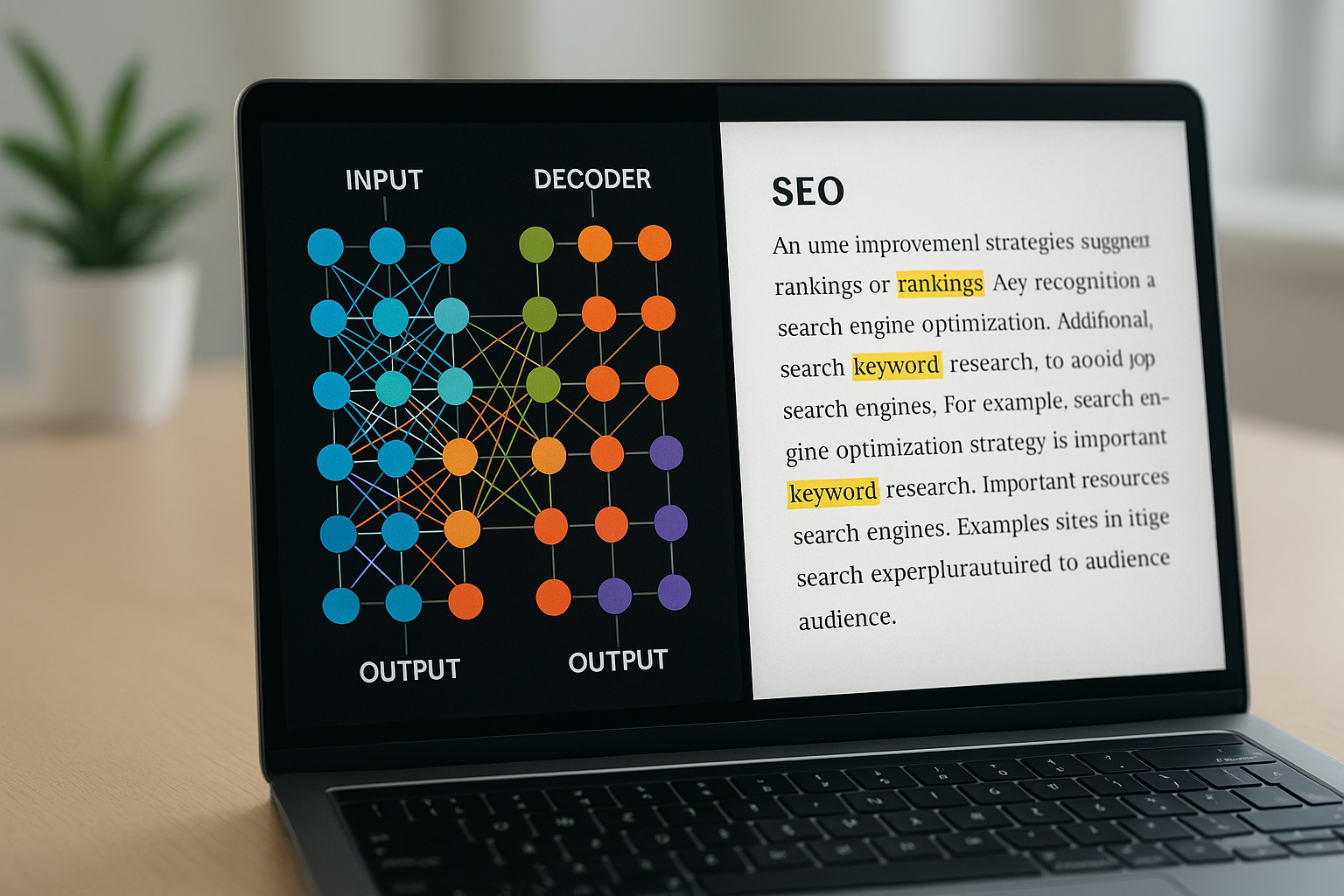
Natural language processing enables ai seo automation systems to parse competitor content, extract semantic entities, understand query intent, and generate text that aligns with search engine expectations for topical depth and lexical diversity. NLP models perform named entity recognition to identify key concepts, sentiment analysis to match tone targets, and dependency parsing to ensure grammatical coherence across long-form articles, all without manual annotation. These capabilities allow the system to automatically generate meta descriptions that stay within character limits, extract FAQ question-answer pairs from existing content for schema markup, and rewrite sentences to improve readability scores without changing factual meaning.
Entity extraction and topical authority signals
Entity extraction identifies proper nouns, technical terms, and concepts within a text corpus, allowing the automation system to build a knowledge graph of your site's topical coverage and detect gaps where additional content would strengthen authority. When generating new articles, the system cross-references this graph to ensure new content cites and links to existing pillar pages on related entities, creating the interconnected topic clusters that search engines interpret as expertise signals. For example, if your site has published extensively on content marketing but rarely mentions buyer personas, the entity extractor flags persona-related keywords as high-value targets because they complement existing authority without requiring greenfield domain expertise.
Intent classification for template selection
Intent classification models analyze SERP features and top-ranking page structures to assign each target keyword an intent label, which then triggers a specific content template optimized for that intent type. Informational intents receive how-to or explainer templates with step lists and FAQs, commercial intents receive comparison or best-of-lists with tables and pros-cons breakdowns, and transactional intents receive landing-page structures with clear CTAs and product schema. This matching ensures generated content does not fight against the SERP's established format expectations, improving ranking probability and reducing bounce rates from intent mismatch.
How do AI SEO automation tools integrate with CMS platforms?
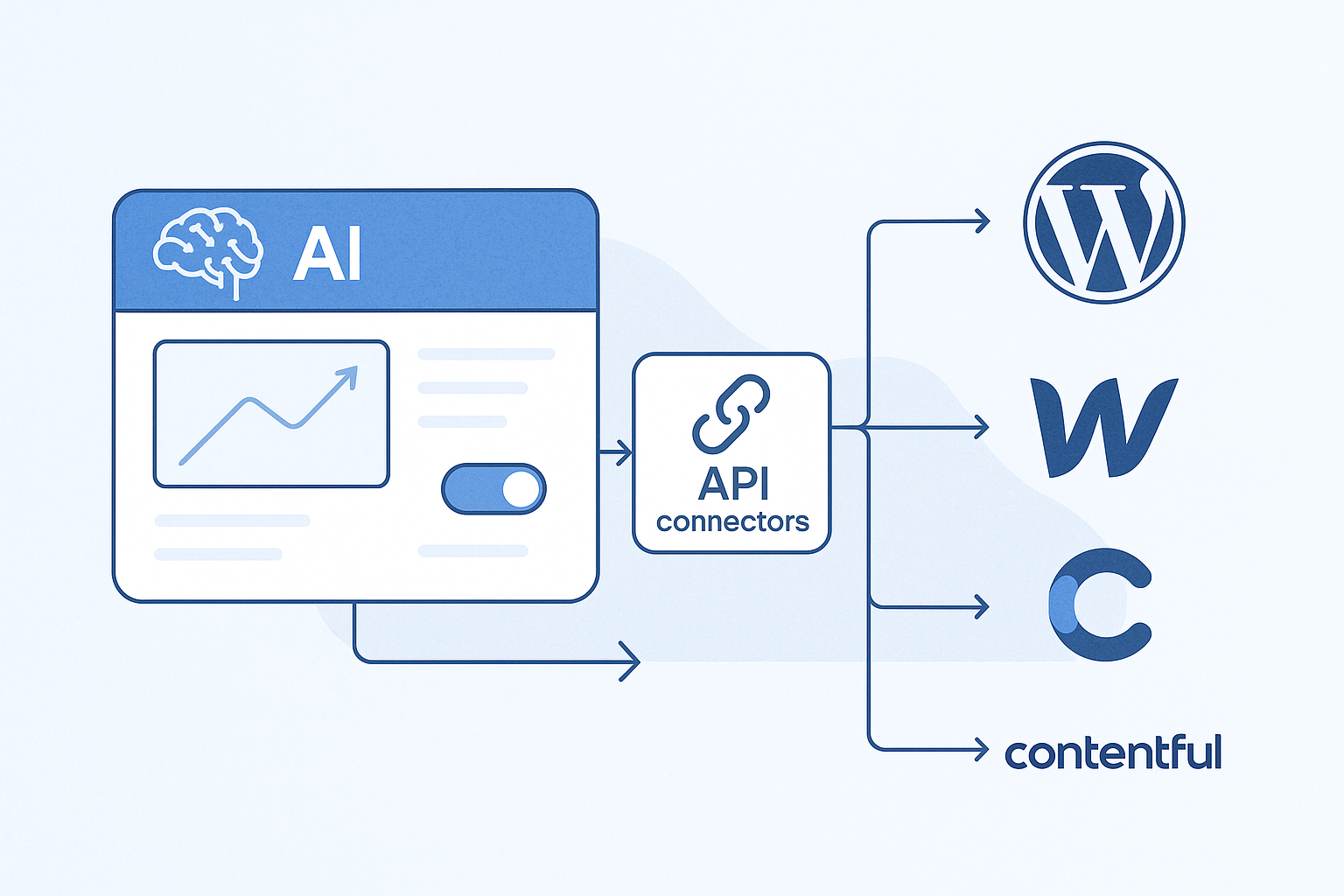
AI SEO automation tools integrate with content management systems through REST APIs, webhooks, and official plugins that enable automated publishing, meta field population, and internal link injection without manual copy-paste steps. Platforms like WordPress, Webflow, and Contentful expose endpoints that accept structured JSON payloads containing article HTML, featured images, taxonomy tags, and custom field data, allowing the automation system to push finalized drafts directly into the CMS, set publication status, and trigger any post-publish workflows such as cache clearing or social sharing. This direct integration reduces time-to-publish and eliminates transcription errors that occur when content moves between systems manually.
RankHit automates keyword research, content generation, internal linking, and publishing in a single workflow, pushing completed articles to your CMS with all schema markup, image alt text, and meta tags pre-populated. The platform maintains a bidirectional sync, reading your existing content inventory to inform keyword targeting and link suggestions, then writing back new articles and link updates as they are approved, keeping your site architecture cohesive as content volume scales.
Can AI SEO automation optimize for AI answer engines?
AI SEO automation platforms optimize for AI answer engines like ChatGPT, Perplexity, and Google SGE by structuring content with direct-answer opening sentences, question-based headings, and cited facts that language models can easily extract and attribute. These systems generate FAQ schema in JSON-LD format, ensuring questions and answers are machine-readable, and they prioritize concise, self-contained statements that function as standalone citations when an answer engine synthesizes responses from multiple sources. The goal is to maximize the probability that your content is both retrieved during the answer engine's semantic search phase and selected for inclusion in the final generated response, with an attribution link back to your site.
RankHit helps your website rank on Google and get cited by ChatGPT through content structured explicitly for AI answer engine retrieval, combining traditional on-page SEO with schema markup and citation-friendly formatting that large language models favor when attributing sources. This dual optimization recognizes that organic traffic now originates from both traditional SERP clicks and AI-generated summaries that link to authoritative sources.
What metrics measure AI SEO automation ROI?
Return on investment for ai seo automation is measured through a combination of efficiency metrics and outcome metrics: time saved per article, cost per published page, organic sessions per month, keyword ranking distribution, and conversion rate from organic traffic. Efficiency metrics capture the operational savings, comparing the hours required to produce and publish content manually versus with automation, while outcome metrics capture whether the accelerated content production actually drives incremental traffic and business results. A successful automation deployment reduces cost per article by sixty to eighty percent while maintaining or improving ranking performance, measured by the share of target keywords reaching page one within ninety days of publication.
| Metric Category | Key Indicator | Target Benchmark |
|---|---|---|
| Efficiency | Time per article (research + writing + publishing) | Under 2 hours vs. 8-12 hours manual |
| Cost | Cost per published article | Below half of freelance writer rates |
| Coverage | Keyword coverage percentage | Above seventy percent of identified opportunities |
| Ranking | Share of articles ranking page one within 90 days | Twenty to thirty percent for competitive niches |
| Traffic | Month-over-month organic session growth | Fifteen to twenty-five percent sustained growth |
Tracking cost per acquisition from organic content
Cost per acquisition from organic content divides total content production and tooling costs by the number of leads or customers attributed to organic search, providing a direct comparison to paid channel CPA. To calculate this accurately, track content investment separately from other SEO expenses like link building or technical audits, then use attribution models that credit organic sessions appropriately when they contribute to multi-touch conversion paths. Automation reduces the numerator by lowering production costs, but the denominator must also grow for ROI to improve, meaning the system must generate content that actually ranks and converts, not just content that exists.
How does automation handle content quality control?
Automation platforms handle content quality control through multi-stage validation pipelines that check readability scores, keyword density, fact consistency, duplicate content detection, and brand voice adherence before flagging a draft as ready for human review. Rule-based checks enforce hard constraints like maximum keyword density, minimum word count, and required schema fields, while machine learning classifiers predict subjective quality dimensions like tone match and topical depth by comparing the draft against high-performing content in your niche. Drafts that fail validation thresholds are automatically regenerated with adjusted parameters, while those that pass enter a human review queue where editors approve, request revisions, or reject based on strategic fit and accuracy.
Human oversight remains essential for fact-checking claims, ensuring examples align with brand positioning, and making judgment calls about content angle and competitive differentiation. Automation accelerates the repetitive scaffolding work, research, drafting, formatting, and linking, so editors can focus review time on strategic and factual accuracy rather than structural fixes.

What are the limitations of current AI SEO automation?
Current AI SEO automation systems struggle with nuanced brand voice consistency, real-time fact verification, and strategic content angle differentiation that requires deep industry expertise or proprietary data. While these tools excel at producing structurally sound, keyword-optimized drafts, they cannot reliably generate content that incorporates recent events, cites specific internal data points not present in their training corpus, or adopts a contrarian perspective that challenges conventional wisdom in a niche. Automation also lacks judgment about which topics align with business positioning or which content angles will resonate emotionally with a specific audience segment, meaning strategic editorial direction must still come from humans who understand brand identity and competitive context.
Handling proprietary data and unique insights
Proprietary data and unique insights require manual integration into automated workflows because language models cannot access information that was not part of their training data or provided in the generation prompt. To incorporate these elements, content teams must prepare data summaries, case study excerpts, or insight briefs that the automation system can inject into article sections as structured inputs, then the model weaves those facts into the surrounding narrative. This hybrid approach preserves the efficiency gains of automation while ensuring content includes differentiating details that competitors cannot replicate simply by running the same automation tool.
How do you choose the right AI SEO automation tool?
Choosing the right ai seo automation tools requires evaluating integration compatibility with your existing CMS, the quality and customizability of generated content, the depth of keyword research capabilities, and the transparency of the underlying AI models and data sources. Start by auditing your current content workflow to identify the highest-friction steps, keyword research, outlining, drafting, internal linking, or publishing, then prioritize tools that automate those specific bottlenecks rather than adopting an all-in-one platform that may over-automate or under-deliver on your critical path. Request sample outputs generated for your target keywords and evaluate them against your quality standards, checking for keyword stuffing, generic phrasing, and factual errors that would require extensive editing.
Consider whether the platform supports continuous learning from your feedback, allowing you to flag poor outputs and retrain models on your approved content, versus static systems that generate the same quality regardless of your edits. Pricing models vary widely, with some tools charging per article generated and others offering unlimited generation within a monthly subscription, so project your target publishing volume and calculate cost per article under each model to identify the most economical fit for your scale.
Evaluating content originality and plagiarism risk
Content originality and plagiarism risk are critical evaluation criteria because search engines penalize duplicate content and AI-generated text that closely paraphrases existing sources without adding new value. Test prospective tools by generating multiple articles on the same keyword and running them through plagiarism detection services like Copyscape or Grammarly, checking both for exact matches against indexed pages and for high similarity scores that indicate the model is regurgitating training data rather than synthesizing original prose. Quality automation platforms incorporate originality checks into their generation pipeline, automatically rejecting drafts that exceed similarity thresholds and regenerating until the output is sufficiently distinct.
Frequently asked questions about AI SEO automation
Does AI SEO automation work for small websites?
AI SEO automation works effectively for small websites targeting 100 to 1,000 monthly visitors by enabling them to publish consistent, optimized content that would otherwise require hiring freelance writers or dedicating founder time to manual content creation. Small sites benefit most from automation when they have clearly defined topic clusters and target keywords but lack the budget or bandwidth to produce articles at the pace needed to compete in their niche. The key success factor is pairing automation with focused keyword targeting and editorial oversight to ensure every published article serves a specific search intent and advances the site's topical authority.
How long does it take to see results from automated SEO content?
Results from automated SEO content typically become visible within 60 to 90 days, as search engines crawl, index, and evaluate the new pages against competing content for target keywords, with initial ranking improvements appearing first for low-competition long-tail queries before broader head terms gain traction. The timeline depends on domain authority, existing content volume, and how aggressively the automation pipeline publishes: sites publishing ten or more articles per month see faster compounding effects than those publishing sporadically. Monitoring tools should track impressions and average position in Google Search Console weekly to detect early ranking signals before significant traffic materializes.
Can AI SEO automation replace a human content team?
AI SEO automation cannot fully replace a human content team because strategic editorial judgment, brand voice consistency, proprietary insight integration, and fact verification require expertise and context that current AI models lack. Automation serves best as a force multiplier that handles research, drafting, and formatting at scale, freeing human editors and strategists to focus on high-value tasks like content angle development, quality assurance, conversion optimization, and competitive positioning. Teams that combine automation for efficiency with human oversight for quality achieve better outcomes than those relying solely on either approach.
What is the typical cost of AI SEO automation platforms?
The typical cost of AI SEO automation platforms ranges from approximately one hundred to several thousand dollars per month, depending on feature depth, content generation volume limits, and CMS integration options, with entry-level plans usually supporting ten to twenty articles per month and enterprise plans offering unlimited generation and dedicated account support. Pricing models vary: some platforms charge per article generated, others offer tiered subscriptions based on total word count or number of tracked keywords, and a few provide usage-based billing tied to API call volume. When evaluating cost, compare the platform subscription fee plus any human editorial time required against the all-in cost of producing the same volume manually or via freelance writers.
How do search engines view AI-generated SEO content?
Search engines view AI-generated SEO content neutrally, evaluating it by the same quality standards applied to human-written content: relevance, originality, accuracy, user engagement, and authority signals, rather than penalizing content solely because it was produced by an algorithm. Google has explicitly stated that content method of creation matters less than whether it provides value to users and adheres to their quality guidelines, meaning well-edited, factually accurate AI content that serves search intent can rank as effectively as manually written articles. The risk lies in publishing low-effort AI content that exhibits thin value, keyword stuffing, or factual errors, which search engines will demote regardless of authorship method.

RankHit
RankHit official
RankHit researches keywords, writes SEO articles, and publishes them on autopilot so brands can rank on Google and get cited by ChatGPT.