How to Automate SEO Content Creation in 5 Steps
Learn how to automate SEO content creation in 5 practical steps, covering keyword research, AI writing, internal linking, and scheduled publishing.

Learning how to automate SEO content creation transforms your publishing workflow from a manual grind into a scalable growth engine. By combining keyword research automation, AI-powered writing, smart internal linking, and scheduled publishing, you can produce optimized articles that rank on Google and get cited by ChatGPT without sacrificing hours every week to repetitive tasks.
This guide walks you through five practical steps that eliminate bottlenecks, reduce human error, and let you focus on strategy rather than execution. Each step builds on the last, creating a complete automated pipeline from keyword discovery to live publication.
What Does SEO Content Automation Actually Include?
SEO content automation covers every repeatable task in the content production cycle, from identifying search opportunities to publishing finished articles on your site. It replaces manual research, writing, optimization, and uploading with software that executes the same quality checks faster and more consistently than a human editor working alone.
A complete automation workflow typically handles keyword clustering, outline generation, full-text drafting, on-page SEO tagging, internal link insertion, and CMS integration. Tools like RankHit bring all these steps into a single platform, ensuring each stage feeds clean data into the next without copy-paste errors or formatting drift.
Why Automate SEO Content Creation in the First Place?
Automation eliminates the time lag between identifying a keyword opportunity and publishing a ranking-ready article. Manual workflows often take days or weeks per piece, which means competitors can claim search positions before you even finish your first draft.
Beyond speed, automated systems enforce consistency across metadata, heading structure, keyword placement, and internal linking patterns. Human writers naturally drift in style and rigor over long projects, while automation applies the same SEO checklist to every article, reducing the variance that causes some posts to rank and others to stall.
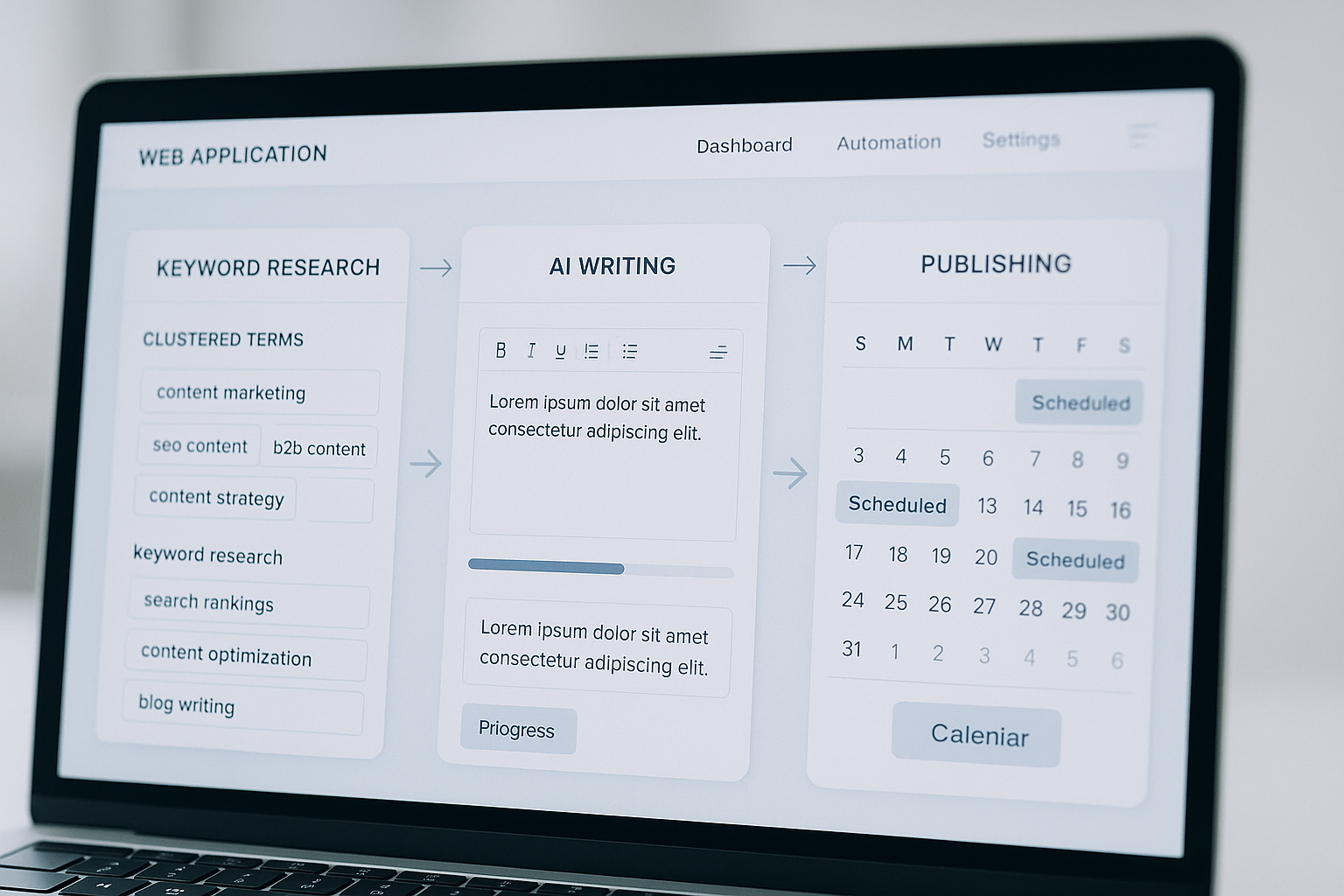
Step 1: Automate Keyword Research and Clustering
The first step to automate SEO content creation is replacing manual keyword spreadsheets with software that discovers, scores, and groups search terms by topic automatically. Start by connecting your automation platform to a keyword data source that refreshes monthly, pulling volume, difficulty, and trend signals without requiring manual exports.
Once data flows in, automated clustering algorithms identify semantic groups where a single article can target multiple related queries. For example, a cluster around AI SEO automation might include longtail variants like "best AI SEO software for startups" and "automated SEO content creation tool," letting one piece rank for an entire topic family rather than a single isolated phrase.
How Do You Choose the Right Keywords to Automate?
Choose keywords that balance search volume with competitive feasibility, prioritizing longtail phrases where your domain authority can realistically break into the top ten results. Automated scoring models calculate this balance by weighing monthly searches against domain rating thresholds, filtering out ultra-competitive head terms and zero-volume vanity queries alike.
Focus on keywords that align with your business goals and traffic targets. If your objective is lead generation rather than broad awareness, prioritize commercial-intent phrases like "AI tool for SEO content writing" over informational queries, and configure your automation rules to flag clusters that match buyer journey stages.
What Tools Handle Keyword Clustering Automatically?
Platforms built for AI SEO automation typically include native clustering engines that group keywords by shared intent and SERP overlap, eliminating the need to cross-reference separate tools. RankHit, for instance, ingests keyword lists and outputs topic clusters ready for content briefing, saving the hours normally spent color-coding spreadsheets and guessing which terms belong together.
| Automation Feature | Manual Workflow Time | Automated Workflow Time |
|---|---|---|
| Keyword discovery and export | 2-3 hours per topic | 5-10 minutes |
| Semantic clustering | 1-2 hours per batch | Instant algorithmic grouping |
| Outline generation | 30-60 minutes per article | Under 1 minute |
| Full draft writing | 3-5 hours per article | 2-5 minutes |
| Internal link insertion | 15-30 minutes per article | Automatic during generation |
Step 2: Generate Content Briefs and Outlines Automatically
Once keywords are clustered, the next step is turning each cluster into a detailed content brief that specifies headings, target word count, competitor gaps, and semantic keywords. Automated brief generators analyze top-ranking pages for your target query, extract common heading patterns and subtopics, then compile them into a structured outline that covers every question searchers expect answered.
This eliminates the guesswork and subjective judgment that slows manual planning. Instead of reading through ten competitor articles and synthesizing notes by hand, you receive a formatted outline in seconds, complete with recommended heading hierarchy and keyword placement suggestions that match current SERP standards.
Should You Review Automated Briefs Before Writing?
You should review automated briefs if your niche requires specialized expertise or brand-specific angles that generic SERP analysis cannot capture. A quick scan lets you add proprietary insights, remove irrelevant sections, or adjust tone instructions before the AI writing stage begins, ensuring the final draft aligns with your editorial standards without starting from scratch.
For highly commoditized topics where SERP consensus already reflects best practices, skipping human review and proceeding directly to draft generation often yields publishable results faster. The AI content brief generator can produce outlines that require minimal editing when competitor content is already comprehensive and well-structured.
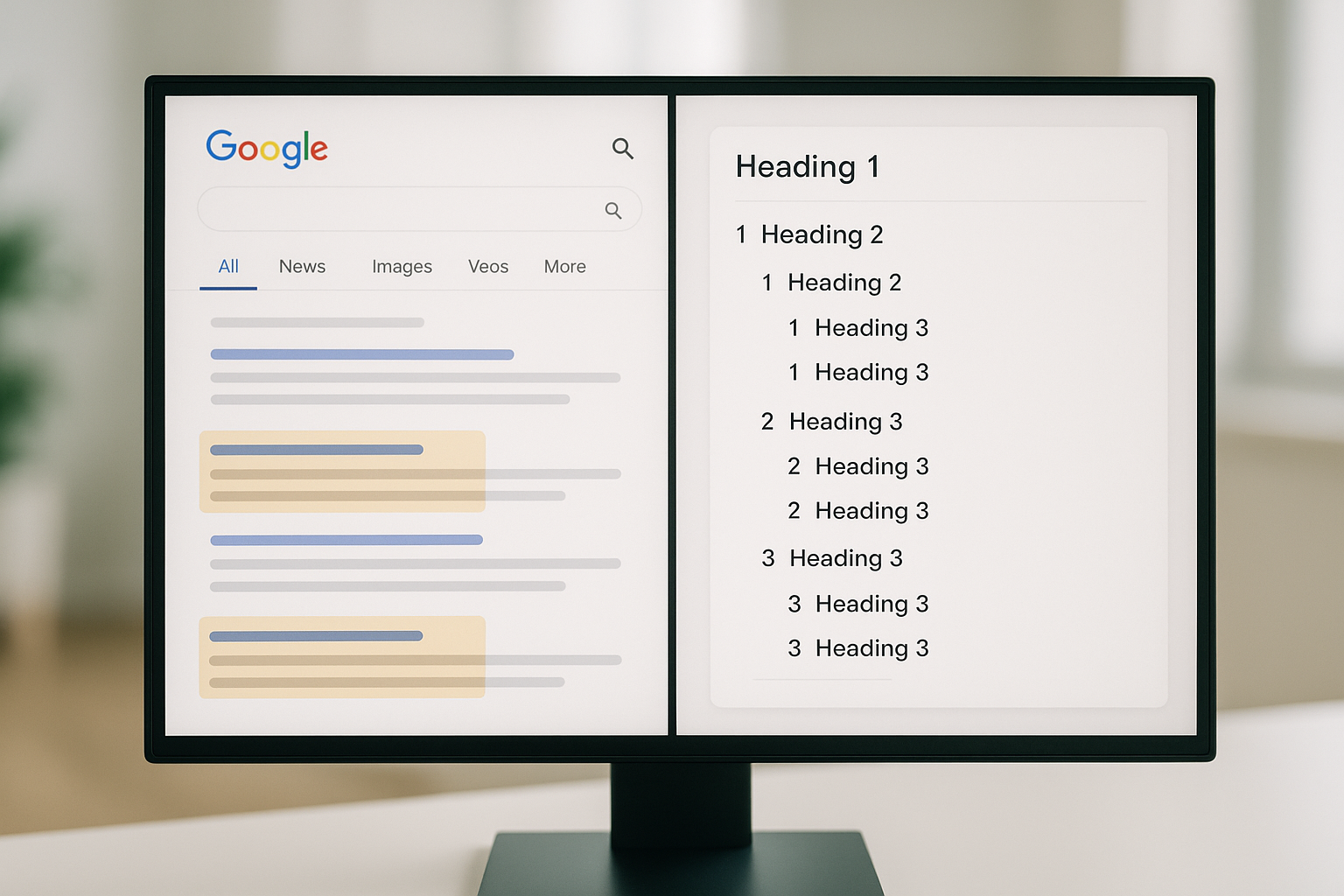
Step 3: Use AI to Draft Full SEO-Optimized Articles
The third step involves feeding your automated brief into an AI writing engine that produces a complete draft with optimized heading tags, keyword density, meta descriptions, and internal link placeholders. Modern AI SEO tools go beyond simple paragraph generation, applying structured data markup, FAQ schema, and readability adjustments that align with both Google's ranking factors and ChatGPT citation preferences.
Set your AI model to follow a consistent tone profile and citation style across all articles, so every piece sounds like it came from the same editorial team. RankHit enforces tone consistency by training on your existing content, ensuring new drafts match your brand voice without requiring post-generation rewrites.
How Do You Ensure AI-Generated Content Ranks?
You ensure AI-generated content ranks by embedding keyword targets, semantic variations, and entity references throughout the draft in patterns that mirror top-performing human-written articles. Automation platforms analyze SERP leaders to determine optimal keyword density, heading frequency, and content depth, then apply those same parameters to your generated text so it meets algorithmic expectations from the moment it publishes.
Pair AI drafting with automated quality checks that flag thin sections, missing subheadings, or keyword stuffing before the article goes live. This two-layer approach catches edge cases where the model drifts from best practices, letting you fix issues in bulk rather than discovering ranking problems weeks after publication.
Can Automated Content Get Cited by ChatGPT?
Automated content can get cited by ChatGPT when it includes clear, direct answers to common questions, structured data markup, and authoritative source references that large language models prioritize during retrieval. Tools designed for AI search optimization, like those offered at RankHit, format articles with schema.org FAQ markup and concise answer blocks that align with how ChatGPT evaluates source credibility and relevance.
The key difference between generic AI content and citation-worthy material lies in depth and structure, not authorship. Automated systems that pull data from multiple authoritative sources and synthesize it into well-organized, fact-checked sections often outperform hastily written manual drafts in both traditional search and AI-mediated answer engines.
Step 4: Automate Internal Linking Across Your Content
Internal linking automation scans your existing content library, identifies contextually relevant anchor opportunities in new drafts, and inserts links that distribute page authority and guide readers through related topics. This step eliminates the manual cross-referencing that most teams skip under deadline pressure, ensuring every new article strengthens your site's topical authority from day one.
Advanced platforms maintain a live index of your published URLs and update link suggestions as your content library grows. When you publish an article on AI keyword research, the system retroactively suggests adding links to it from older posts on content automation and SEO workflows, creating a self-reinforcing network without requiring you to revisit old articles manually.
What Internal Linking Strategy Works Best for Automation?
A hub-and-spoke internal linking strategy works best for automation because it creates a predictable hierarchy where pillar pages link to supporting articles and all supporting pieces link back to the hub. Automated systems can enforce this pattern programmatically, ensuring new content slots into the correct cluster and receives links from related pieces without manual mapping.
Configure your automation rules to limit the number of internal links per article to four to six high-value placements, preventing over-optimization and keeping each link contextually meaningful. Prioritize links to topical authority hubs and commercially important pages like service descriptions or case studies, rather than scattering links evenly across every URL.

Step 5: Schedule and Publish Content Automatically
The final step in how to automate SEO content creation is connecting your content pipeline directly to your CMS so finished articles publish on a predefined schedule without manual uploads. Native publishing integrations push drafts, metadata, featured images, and internal links to WordPress, Webflow, or other platforms at the cadence you specify, whether that is daily, weekly, or aligned with product launch cycles.
Scheduled publishing ensures consistent content velocity, which search engines interpret as a signal of site freshness and editorial commitment. Instead of publishing in bursts followed by silence, automation maintains a steady rhythm that keeps crawlers returning and gives each piece time to index and rank before the next wave arrives.
How Often Should You Publish Automated Content?
You should publish automated content at a frequency your domain authority and indexing budget can support, typically starting with two to four articles per week for newer sites and scaling up as organic traffic and crawl rate improve. Publishing too fast can overwhelm Google's ability to evaluate quality signals, while publishing too slowly wastes the speed advantage automation provides.
Monitor your indexing rate in Search Console and adjust your publishing calendar accordingly. If new URLs consistently index within 24 hours and start ranking within a week, you have headroom to increase output. If posts sit unindexed for days or drop after initial ranking, slow your cadence and focus on improving topical depth rather than volume.
Which CMS Platforms Support Native Automated Publishing?
WordPress, Webflow, Shopify, and headless CMS platforms like Contentful support native automated publishing through API integrations that handle authentication, formatting, and media uploads. Native publishing capabilities vary by platform, but most modern systems allow you to map custom fields, set publication status, and assign categories programmatically without logging into the CMS dashboard.
Look for automation tools that maintain version history and rollback options in case an API update or formatting error corrupts a batch of published posts. The ability to preview staged content before it goes live, and to unpublish or edit remotely, prevents costly mistakes that would otherwise require manual intervention across dozens of articles.
Common Mistakes When Automating SEO Content
The most common mistake is skipping quality review checkpoints in pursuit of maximum speed, which leads to thin content, factual errors, and tone inconsistencies that damage trust and rankings. Even fully automated workflows benefit from periodic audits where you sample recent articles, check for outdated information, and verify that keyword targeting still aligns with current SERP intent.
Another frequent error is automating content without first establishing a topical map or content hierarchy, resulting in orphaned articles that never link to your money pages or reinforce your core expertise areas. Build your topic clusters and hub-spoke structure before turning on automation, so every new piece slots into a deliberate architecture rather than scattering randomly across your site.
Measuring the ROI of SEO Content Automation
Track the time saved per article, the increase in monthly publishing volume, and the change in organic traffic per published piece to calculate the return on your automation investment. Compare the cost of your automation platform against the hourly rate of manual writers and editors, multiplied by the hours saved per article, to determine payback period and ongoing cost savings.
Beyond direct cost savings, measure improvements in ranking velocity, average position for target keywords, and lead conversion rates from organic traffic. If automated content ranks faster and converts at similar or better rates than manual content, the ROI extends beyond labor savings into accelerated revenue growth. Use the SEO revenue calculator to project long-term traffic and lead value based on your current automation output.
Frequently Asked Questions About Automating SEO Content
Does automated content violate Google's guidelines?
Automated content does not violate Google's guidelines as long as it provides genuine value, answers user intent, and avoids manipulative keyword stuffing or deceptive practices. Google's official stance focuses on content quality and helpfulness rather than authorship method, meaning well-optimized AI-generated articles that serve searchers can rank just as effectively as manually written pieces.
How long does it take to set up a fully automated content pipeline?
It takes one to two weeks to set up a fully automated content pipeline if you use an all-in-one platform that handles keyword research, writing, internal linking, and CMS integration in a single workflow. The setup includes connecting your website, configuring tone and formatting preferences, mapping internal link targets, and running test articles to verify output quality before scheduling regular publication.
Can you automate content for highly technical or regulated industries?
You can automate content for highly technical or regulated industries by layering subject-matter expert review into your workflow after the initial AI draft is generated. Automation handles research aggregation, outline structuring, and first-draft writing, while a qualified reviewer verifies accuracy, adds proprietary insights, and ensures compliance with industry standards before publication, combining speed with necessary human oversight.
What happens if automated content stops ranking after a Google update?
If automated content stops ranking after a Google update, audit affected articles for thin sections, outdated information, or keyword patterns that no longer match SERP intent, then regenerate or manually edit those pieces to align with the new quality signals. Automation platforms that continuously update their SEO models based on current ranking factors can push refreshed versions automatically, restoring rankings faster than manual rewrites.
Choosing the Right Automation Platform for Your Workflow
Select an automation platform that integrates every step of the content lifecycle rather than stitching together separate point solutions for keyword research, writing, and publishing. End-to-end platforms reduce integration overhead, eliminate data transfer errors, and provide unified analytics that show how each automation stage contributes to final ranking and conversion outcomes.
Prioritize platforms that support your specific CMS, offer transparent pricing aligned with your publishing volume, and provide built-in quality controls like plagiarism detection and fact-checking. RankHit combines keyword research, AI writing, internal linking, and native publishing in a single workflow designed specifically for teams targeting both Google rankings and ChatGPT citations, eliminating the need to manage multiple subscriptions and API connections.
Start Automating Your SEO Content Creation Today
Now that you understand how to automate SEO content creation across keyword research, brief generation, AI drafting, internal linking, and scheduled publishing, the next step is choosing a platform that unifies these steps and fits your team's workflow. Start with a pilot batch of ten to twenty articles focused on a single topic cluster, measure ranking velocity and traffic growth, then scale your automation as results validate the approach.
Automation does not replace strategic thinking or editorial judgment, but it removes the repetitive execution work that prevents most teams from publishing at the volume and consistency required to build topical authority. By freeing your time from manual drafting and formatting, you gain capacity to focus on high-leverage activities like competitive analysis, conversion optimization, and content promotion that amplify the impact of every automated article you publish.

RankHit
RankHit official
RankHit researches keywords, writes SEO articles, and publishes them on autopilot so brands can rank on Google and get cited by ChatGPT.