Automated SEO Content Creation Tool: Features That Matter Most
Learn which features matter most in an automated SEO content creation tool, from keyword research to publishing workflows and internal linking.

Selecting an automated SEO content creation tool requires evaluating a precise set of capabilities that directly impact search visibility and content efficiency. The difference between a tool that generates text and one that drives measurable organic growth lies in features such as real-time keyword integration, internal linking intelligence, and publishing automation that connects research to live pages.
This guide examines optimization and best practices across every feature category that separates effective automated SEO content creation tools from those that produce generic output. You will learn how to assess keyword research depth, content generation quality, on-page optimization controls, and workflow automation to ensure the tool you choose aligns with strategic SEO goals rather than adding busywork to your process.
Why Feature Selection Drives SEO Outcomes
Feature selection determines whether an automated SEO content creation tool accelerates your ranking trajectory or merely automates low-value tasks. Tools that integrate keyword research, content generation, internal linking, and publishing into one cohesive workflow eliminate the manual handoffs that introduce errors and delay publication, allowing your site to capture search demand weeks faster than competitors relying on fragmented solutions.
The best tools surface optimization opportunities within the content creation interface itself, embedding keyword density feedback, readability metrics, and schema markup suggestions directly where you draft and refine articles. This contextual guidance ensures every published piece meets technical SEO standards without requiring a separate audit step, which is especially valuable for small businesses and startups operating without dedicated SEO teams.
Keyword Research Capabilities That Scale
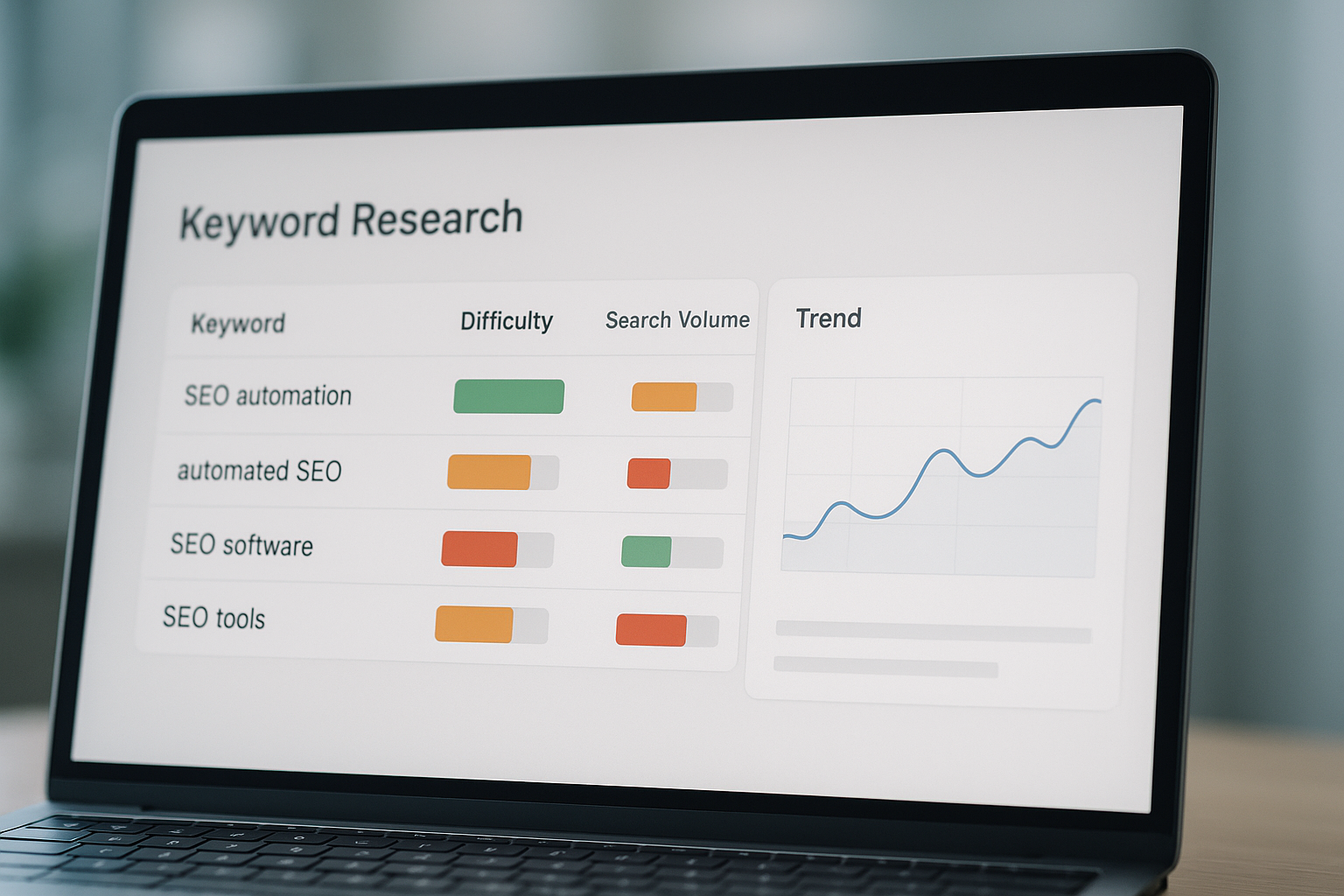
Robust keyword research features within an automated SEO content creation tool should deliver both seed keyword expansion and competitive gap analysis, enabling you to identify not only high-volume terms but also the long-tail variations your competitors have not yet targeted. Look for tools that pull data from multiple sources, including Google Keyword Planner APIs and third-party indices, to provide search volume, competition scores, and trend direction for every suggested keyword.
Advanced platforms go further by clustering semantically related keywords into content briefs, automatically grouping terms by intent so a single article can target a primary keyword and several longtail variations without diluting focus. This clustering reduces the number of articles needed to cover a topic comprehensively and increases the likelihood that each page ranks for multiple queries, which is exactly the approach that drives domain authority growth in competitive niches such as AI SEO automation and SEO content automation.
How Search Intent Classification Improves Content Strategy
Search intent classification within keyword research modules enables an automated SEO content creation tool to recommend the right content format for each keyword, distinguishing between informational, transactional, and navigational queries. When the tool understands intent, it can suggest listicles for comparison searches, how-to guides for problem-solving queries, and product pages for buying-intent keywords, ensuring the content structure matches what users expect and what search engines reward.
Real-Time Keyword Difficulty and Trend Data
Real-time keyword difficulty scoring helps prioritize which keywords to target first, allowing startups and small businesses with lower domain authority to focus on achievable wins rather than chasing ultra-competitive terms. Tools that refresh trend data weekly or monthly ensure your content calendar responds to seasonal shifts and emerging topics, preventing wasted effort on declining search volume.
Content Generation Quality and Customization
Content generation quality hinges on the underlying language model's training data, prompt engineering, and the tool's ability to incorporate your brand voice and factual accuracy checks. An automated SEO content creation tool should produce draft articles that require light editing rather than full rewrites, maintaining grammatical correctness, logical flow, and topical depth without veering into repetitive or generic phrasing that signals low-quality content to both readers and search algorithms.
Customization features allow you to define tone, adjust formality, set target word counts, and input brand-specific terminology or product names so the generated content aligns with your existing editorial style. The best tools also support section-level regeneration, letting you refine individual paragraphs or headings without discarding the entire draft, which accelerates the review process and preserves the parts that already meet your standards.
What Role Does Fact-Checking Play in Automated Content?
Fact-checking integrations or flagging systems within an automated SEO content creation tool reduce the risk of publishing inaccurate statistics or outdated information, which can harm credibility and trigger manual penalties. Some platforms cross-reference claims against databases or flag statements that lack supporting evidence, prompting you to verify or remove unsupported assertions before the content goes live.
Tone Consistency Across High-Volume Publishing
Tone consistency features ensure that whether you publish one article per week or fifty per month, every piece reflects the same voice, formality level, and sentence rhythm. Tools that let you train custom style profiles or import sample articles as tone references maintain brand identity at scale, preventing the disjointed reading experience that occurs when different AI models or prompts produce wildly different outputs.
On-Page SEO Optimization Controls
On-page SEO optimization controls embedded within an automated SEO content creation tool should guide meta title length, meta description phrasing, heading hierarchy, and keyword placement without requiring you to switch to external audit software. Real-time feedback on keyword density, readability scores, and semantic keyword coverage ensures each draft meets technical standards before it reaches your editorial queue, reducing revision cycles and speeding time to publish.
Advanced tools automatically generate schema markup for articles, FAQs, and how-to content, injecting structured data that enhances rich snippet eligibility and improves visibility in ChatGPT citations and other AI-driven answer engines. This feature is particularly valuable for businesses targeting featured snippets and voice search, where structured data significantly increases the probability of selection.
| Optimization Feature | Why It Matters | Best Practice |
|---|---|---|
| Keyword Density Monitor | Prevents over-optimization and keyword stuffing penalties | Target 0.4 to 0.5 percent for primary keywords |
| Heading Hierarchy Check | Ensures logical structure for readers and crawlers | Use one H1, multiple H2s, and nested H3s where needed |
| Readability Score | Matches content complexity to audience education level | Aim for Flesch Reading Ease between 60 and 70 for general audiences |
| Schema Markup Generator | Increases rich snippet eligibility and AI citation probability | Include FAQ and Article schema on every blog post |
| Image Alt Text Automation | Improves accessibility and image search rankings | Write descriptive alt text with target keyword when relevant |
How Does Semantic Keyword Coverage Differ from Exact Match Optimization?
Semantic keyword coverage prioritizes related terms and synonyms over exact match repetition, helping your content rank for a broader set of queries without triggering over-optimization flags. An automated SEO content creation tool with semantic analysis identifies gaps where related concepts are missing, prompting you to add supporting topics that deepen the article's relevance and topical authority.
Internal Linking Intelligence and Automation
Internal linking intelligence within an automated SEO content creation tool analyzes your existing content library to recommend contextually relevant links, distributing link equity strategically and reducing orphan pages that never receive internal anchor text. The best systems suggest anchor text phrasing that matches natural language patterns while incorporating target keywords, ensuring links feel organic to readers and signal topical relationships to search engines.
Automated internal linking at scale transforms site architecture over time, building topic clusters where pillar pages receive dozens of supporting links from related articles. This structure is foundational to ranking in competitive niches such as AI SEO automation, where domain authority alone is insufficient without clear topical expertise signaled through internal link patterns.

What Makes Internal Link Suggestions Contextually Relevant?
Contextually relevant internal link suggestions rely on natural language processing to match the sentence or paragraph topic with the destination page's subject, ensuring the link adds value for readers rather than feeling forced. Tools that analyze semantic similarity between content blocks produce suggestions that enhance user experience and session duration, both of which correlate with improved rankings.
Publishing Automation and Workflow Integration
Publishing automation features connect your automated SEO content creation tool directly to your CMS, enabling one-click or scheduled publishing that eliminates manual copy-paste steps and the formatting errors they introduce. Direct integrations with WordPress, Webflow, and other platforms preserve formatting, inject schema markup, and upload images without requiring developer intervention, which is critical for small teams managing high publication volumes.
Workflow integration extends beyond publishing to include approval queues, revision tracking, and role-based permissions, allowing content managers to review drafts, request changes, and approve final versions within the same platform where content is generated. This centralization reduces context switching and keeps every stakeholder aligned on deadlines and quality standards.
How Does Scheduled Publishing Improve Consistency?
Scheduled publishing allows you to batch content creation during dedicated work sessions, then release articles at optimal times based on audience activity patterns and search engine crawl frequency. Consistency signals to search engines that your site is actively maintained, which can positively influence crawl budget allocation and indexing speed for new pages.
Performance Tracking and Analytics Integration
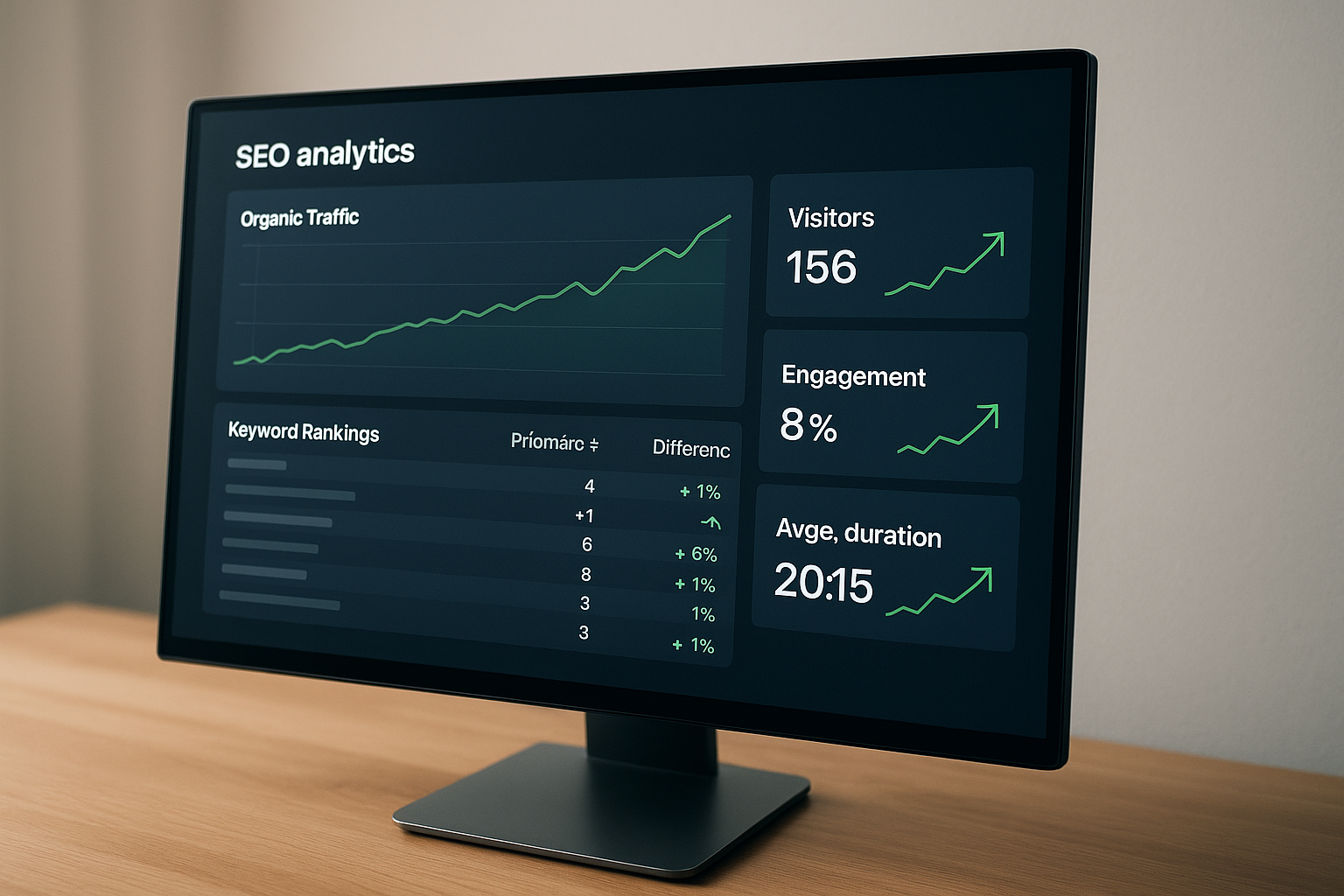
Performance tracking features within an automated SEO content creation tool should connect published content to ranking data, organic traffic, and engagement metrics, closing the loop between content creation and business outcomes. Integration with Google Search Console and Google Analytics enables you to see which keywords each article ranks for, which pages drive conversions, and where content updates are needed to maintain or improve positions.
Advanced platforms surface content decay alerts, notifying you when a previously high-ranking article drops in position so you can refresh the content, add new information, or strengthen internal links before traffic losses compound. This proactive monitoring is essential for maintaining visibility in fast-moving niches where competitor content and algorithm updates constantly shift the ranking landscape.
Why Should Ranking Data Inform Your Content Calendar?
Ranking data informs your content calendar by revealing which topics and keywords already show momentum, allowing you to double down on successful themes with supporting articles, updated statistics, or deeper dives into subtopics. This data-driven approach concentrates effort where you have proven demand and existing authority, accelerating growth more reliably than guessing at trending topics.
Multi-Language and Localization Features
Multi-language support within an automated SEO content creation tool expands your addressable market by generating content in the languages and regional dialects your target audiences speak, complete with localized keyword research and cultural context adjustments. Tools that handle hreflang tag automation and region-specific meta data ensure technical implementation matches content localization, preventing duplicate content issues and maximizing visibility in each geography.
Localization goes beyond translation to adapt examples, currency references, measurement units, and cultural norms, which is especially important for businesses targeting audiences in the United States alongside international markets. The best platforms maintain separate content calendars and keyword sets per region, allowing you to prioritize high-value markets without losing sight of growth opportunities elsewhere.
Collaboration and Team Management Tools
Collaboration features such as comment threads, version history, and task assignment turn an automated SEO content creation tool into a shared workspace where writers, editors, and SEO specialists coordinate without email chains or separate project management software. Clear role definitions prevent accidental overwrites and ensure only approved team members can publish live content, which is critical for maintaining brand standards and avoiding public errors.
Version history allows you to roll back changes when an edit introduces errors or when A/B testing reveals that an earlier version performed better. This safety net encourages experimentation with headlines, meta descriptions, and content angles without the risk of permanently losing working drafts.
Security, Compliance, and Data Privacy
Security and compliance features protect your content pipeline and customer data, especially when your automated SEO content creation tool integrates with CMS platforms, analytics accounts, and keyword databases that contain proprietary research or user information. Look for tools that offer SOC 2 compliance, encrypted data transmission, and role-based access controls to limit exposure if credentials are compromised.
Data privacy provisions ensure that any proprietary keyword lists, content briefs, or performance data you input remain confidential and are not repurposed to train public models or shared with third parties. This is particularly important for startups and small businesses operating in competitive niches where content strategy constitutes a significant portion of competitive advantage.
Frequently Asked Questions
What is the most important feature in an automated SEO content creation tool?
The most important feature is end-to-end workflow integration that connects keyword research, content generation, internal linking, and publishing in a single platform, eliminating manual handoffs that slow publication and introduce errors. This integration ensures every published piece meets technical SEO standards without requiring separate audits or tools, which is essential for small teams scaling content production.
How does automated internal linking improve SEO performance?
Automated internal linking distributes link equity across your site and builds topic clusters that signal topical authority to search engines, helping pillar pages rank for competitive keywords by accumulating contextual backlinks from related articles. This structure also reduces orphan pages and improves crawl efficiency, ensuring new content gets indexed faster.
Can automated SEO content creation tools produce content that ranks on Google?
Yes, automated SEO content creation tools can produce content that ranks on Google when they incorporate robust keyword research, semantic optimization, schema markup, and on-page SEO controls that meet current algorithm standards. Success depends on selecting a tool that prioritizes quality and relevance over volume, and on human review to ensure factual accuracy and brand alignment.
What role does schema markup play in automated content workflows?
Schema markup enhances rich snippet eligibility and increases the likelihood that your content gets cited by AI-driven answer engines such as ChatGPT, which prioritize structured data when selecting authoritative sources. Automated schema generation within content workflows ensures every article includes FAQ, Article, or How-To markup without requiring manual JSON-LD coding, saving time and reducing technical errors.
How often should you update content created by automated tools?
You should review and update automated content whenever ranking data shows position drops, when competitors publish more comprehensive coverage of the same topic, or when new information emerges that makes existing content outdated. Most successful sites refresh high-traffic articles every six to twelve months to maintain relevance and incorporate new keywords or data that sustain visibility.

RankHit
RankHit official
RankHit researches keywords, writes SEO articles, and publishes them on autopilot so brands can rank on Google and get cited by ChatGPT.