AI Tool for SEO Content Writing: How to Pick the Right One
Discover how to pick the best AI tool for SEO content writing based on keyword intelligence, output quality, and publishing integrations.

Finding the best AI tool for SEO content writing depends on three core capabilities: how deeply the platform understands keyword intelligence, how well its output ranks in both traditional search engines and AI answer engines like ChatGPT, and whether it integrates with your publishing workflow end to end. Most tools excel at one dimension and fall short on the others, leaving you to stitch together a fragmented stack or settle for content that reads well but never reaches your audience.
This guide walks you through the exact criteria that separate a genuinely effective AI tool for SEO content writing from a general-purpose text generator, with a concrete framework for testing and comparing platforms before you commit.
Why Keyword Intelligence Comes Before Content Generation
The right AI tool for SEO content writing starts its work long before a single word hits the page. It identifies search terms your target audience actually uses, clusters them by intent, and surfaces long-tail opportunities that competitors overlook. A platform that jumps straight to drafting without this research phase produces polished prose that ranks nowhere, because it optimizes for readability alone rather than the specific queries driving traffic in your niche.
Look for tools that pull real search volume data, analyze competitor keyword gaps, and suggest content angles tied to semantic clusters. This layer determines whether the final article answers the questions your prospects are asking, or simply rehashes a topic in generic terms that Google has already seen a thousand times.
What metrics should keyword intelligence features provide?
Keyword intelligence features should provide search volume, keyword difficulty, cost-per-click estimates, and intent classification at a minimum. Beyond those basics, the best platforms also show you which keywords already rank in AI answer engines like ChatGPT, because citation in conversational AI responses drives an entirely separate traffic stream that traditional keyword tools ignore. When evaluating a candidate tool, test whether it surfaces both traditional SERP opportunities and AI-citation-friendly queries, since optimizing for one without the other leaves half the audience unreachable.
How Output Quality Shapes Both Human Readability and Search Performance
Output quality in an AI tool for SEO content writing means two things simultaneously: the text reads naturally to a human visitor, and it satisfies the structural signals that search algorithms use to assess relevance and authority. Many tools produce fluent, grammatically correct copy that still fails to rank, because they lack the discipline to hit target keyword densities, place headings strategically, or open sections with direct-answer sentences that AI engines can extract as citations.
Test any shortlisted platform by generating a sample article on a topic you know well, then audit it for heading count, keyword placement, internal linking suggestions, and whether the introduction delivers on the promise made in the title. The gap between a passable draft and a ranking asset usually lies in these structural details, not in vocabulary or sentence variety.
Does the tool support structured data and schema markup?
Structured data and schema markup support is essential if you want your content to appear as rich snippets, FAQ panels, or cited answers in conversational AI platforms. The best AI tool for SEO content writing auto-generates FAQ schema in JSON-LD format alongside your article, matching the questions and answers actually written in the body text rather than producing a disconnected snippet. Platforms that skip this step force you to hand-code schema or rely on separate plugins, adding friction to every publish cycle and increasing the risk that your schema drifts out of sync with your content updates.

Integration With Your Publishing Workflow: CMS, WordPress, and API Access
Publishing integrations determine whether your AI tool for SEO content writing becomes a daily productivity multiplier or a manual bottleneck. The most efficient platforms push finished articles directly into WordPress, headless CMS platforms, or custom publishing pipelines via API, preserving formatting, internal links, images, and schema without requiring you to copy-paste or reformat. Tools that export only plain text or basic HTML force you to rebuild structure in your editor, which wastes the time you thought you were saving with automation.
Before committing, verify that the platform supports your specific CMS, can schedule posts in advance, and handles image uploads or placeholders in a way that fits your production process. A seamless handoff from draft approval to live publication is the difference between publishing three articles per week and publishing three per month.
Can you automate internal linking during content generation?
Automating internal linking during content generation saves hours of manual anchor-text hunting and ensures every new article strengthens your site's topical authority from day one. Advanced platforms scan your existing blog inventory, identify semantically relevant targets, and embed contextual links inline with natural anchor text, rather than dumping a generic list of related posts at the end. When evaluating a candidate tool, ask whether it can ingest your sitemap or connect to your CMS to discover link targets automatically, and whether it distributes links throughout the body or clusters them in a single section.
Cost Models and Pricing Structures You Will Encounter
AI tools for SEO content writing typically charge by the article, by monthly word quota, or via flat subscription tiers that bundle keyword research and publishing features. Article-based pricing works well if your volume is low and predictable, but costs spiral quickly once you scale past five or ten posts per month. Word-quota plans offer more flexibility but penalize revisions and iterative editing, since every regenerated paragraph burns through your allowance. Flat subscriptions make budgeting simpler and encourage experimentation, but only if the included feature set matches your actual workflow needs.
Compare pricing models by calculating your effective cost per published article under realistic usage, including keyword research time, revisions, and any add-ons for schema generation or API access. A tool that looks cheaper on the landing page can end up costing more once you account for the hidden time tax of missing integrations or incomplete drafts.
| Pricing Model | Best For | Watch Out For |
|---|---|---|
| Per Article | Low-volume publishers, agencies billing by deliverable | Cost escalation as volume grows, limited revision flexibility |
| Monthly Word Quota | Medium-volume content teams with predictable output | Revision burnout, quota rollover policies, overage fees |
| Flat Subscription | High-volume publishers, those needing full automation | Feature gaps in lower tiers, platform lock-in |
| Usage-Based API | Developers, custom workflows, enterprise integrations | Unpredictable monthly costs, rate limits, technical overhead |
Testing for AI Citation Readiness: ChatGPT and Conversational Search
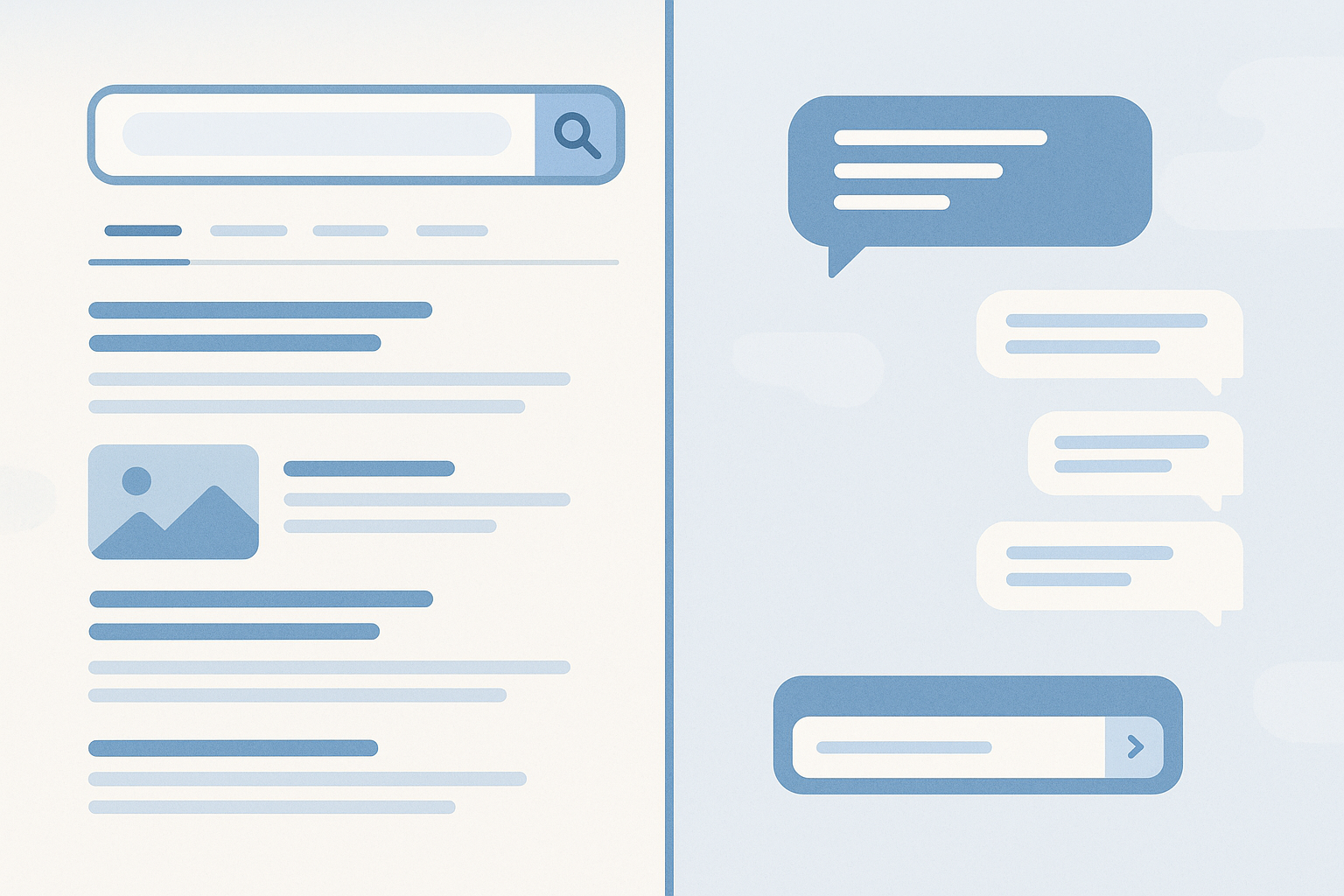
AI citation readiness measures whether your content is structured in a way that conversational AI platforms like ChatGPT can extract, summarize, and cite as an authoritative source. Traditional SEO focuses on ranking in the top ten links, but conversational search collapses those ten results into a single synthesized answer, and only content that opens sections with direct, self-contained sentences gets pulled into that synthesis. The best AI tool for SEO content writing produces articles that satisfy both traditional SERP criteria and the answer-extraction logic used by large language models.
Audit sample output by asking ChatGPT or a similar assistant a question related to the article topic and checking whether your draft content, if published, would supply a citable answer. If the tool buries the key point three sentences into a paragraph or opens with generic scene-setting, it fails the citation test even if it ranks well in traditional search.
How does the tool handle question-based headings?
Question-based headings are essential for AI citation because conversational search queries are almost always phrased as questions, and large language models prioritize content that mirrors that structure. The right platform encourages or auto-generates headings worded the way a real person would type them into a search box, and it ensures the paragraph immediately following delivers a complete, standalone answer before elaborating further. Tools that default to declarative headings or bury the answer midway through the section reduce your chances of being cited, even if the information itself is accurate and thorough.
Evaluating Multilingual and Regional Targeting Capabilities
Multilingual and regional targeting capabilities matter if you serve audiences in multiple countries or languages, since keyword intent, search volume, and conversational AI behavior vary sharply by region. An AI tool for SEO content writing that only pulls keyword data from a global English dataset will miss local idioms, regional competitors, and country-specific search trends, leaving your content optimized for an audience that doesn't exist. Platforms with strong regional support let you specify a target country, pull localized search metrics, and generate content in the native language with culturally appropriate examples and phrasing.
Test this by requesting a sample article for a non-English keyword or a country outside your primary market, then check whether the tool defaults to generic English output or genuinely adapts tone, terminology, and keyword selection to the target region.
How to Run a Side-by-Side Comparison Test
Running a side-by-side comparison test means picking a single topic, feeding it to two or three shortlisted tools with identical briefs, and then auditing the output against a standard checklist: keyword density, heading structure, internal link suggestions, schema generation, and readability. This controlled test reveals which platform balances all the requirements instead of excelling at one dimension and ignoring the rest. Publish the best-performing draft to a staging site and monitor its indexing speed, rank progression, and whether it gets cited in AI answer engines over the following two weeks.
Document your findings in a shared spreadsheet so your team can reference concrete performance data rather than marketing claims when making the final decision. The tool that wins this test is the one that ships rankable content fastest, with the least manual cleanup.
What checklist items matter most in a comparison test?
The checklist items that matter most in a comparison test are keyword placement accuracy, heading count and structure, internal link relevance, schema validity, and time to publish-ready state. Also measure whether the tool surfaces semantic keyword variations naturally, whether it avoids fabricated statistics or brand names, and whether the final output requires more than ten minutes of human editing to meet your quality bar. A platform that scores well on fluency but poorly on structural SEO will cost you more in revision cycles than a tool with rougher prose but tighter optimization discipline.

Understanding the Role of Human Review in Automated Workflows
Human review remains essential even when using the best AI tool for SEO content writing, because automated systems cannot verify factual accuracy, brand voice consistency, or strategic alignment with your current marketing priorities. The goal is not to eliminate human involvement entirely, but to shift it from drafting and formatting toward higher-value tasks like fact-checking, adding proprietary insights, and ensuring the content supports your broader funnel strategy. Platforms that streamline this handoff with in-app commenting, approval workflows, and version control make collaboration faster and reduce the risk of outdated drafts going live.
Budget at least ten to fifteen minutes of human review per article, focused on verifying claims, adjusting tone for brand fit, and confirming that calls to action point to current offers rather than expired promotions.
Can you train the AI on your brand voice over time?
Training the AI on your brand voice over time is possible with platforms that offer custom style guides, approved-phrase libraries, or fine-tuning based on past published content. The most advanced tools learn from your editorial feedback loop, adjusting sentence structure, vocabulary preferences, and formatting habits to match the examples you approve or reject. Ask whether the platform stores this training data at the account level or resets with every new article, because persistent learning compounds value over months while session-level customization disappears the moment you close the tab.
When to Choose a Specialized SEO Tool Over a General AI Writer
Choosing a specialized SEO tool over a general AI writer makes sense when your primary goal is organic traffic growth rather than ad copy, social posts, or general marketing collateral. General-purpose AI writers excel at creative variety and tone flexibility, but they lack the keyword research integrations, schema generation, internal linking logic, and rank-tracking feedback loops that dedicated SEO platforms build in from the ground up. If your success metric is monthly organic visitors or AI citation count rather than content volume alone, the specialized tool will deliver measurable results faster.
Platforms like RankHit automate the entire workflow from keyword discovery through publishing and internal linking, designed specifically to help your website rank on Google and get cited by ChatGPT. This end-to-end approach eliminates the need to stitch together separate tools for research, drafting, optimization, and distribution, reducing both cost and complexity while ensuring every piece of content aligns with your traffic and citation goals.
Security, Data Privacy, and Content Ownership Considerations
Security, data privacy, and content ownership considerations become critical when you feed proprietary research, customer insights, or competitive intelligence into an AI tool for SEO content writing. Review the platform's terms of service to confirm that you retain full ownership of generated content, that your input data is not used to train public models, and that drafts are stored with encryption both in transit and at rest. Platforms that share your prompts or content with third-party model providers introduce risk that your strategic topics or keyword targets leak to competitors or appear in other users' suggestions.
For teams handling sensitive verticals like healthcare, finance, or legal services, ask whether the platform offers on-premises deployment, dedicated instances, or signed data processing agreements that satisfy your compliance requirements.
Who owns the copyright on AI-generated articles?
Copyright on AI-generated articles typically belongs to the user who commissioned the work, provided the platform's terms explicitly assign rights and the output incorporates enough human editorial input to qualify for copyright protection under current law. Most reputable tools clarify ownership in their service agreement, but some reserve a license to use anonymized versions of your content for model improvement or case studies. Read the fine print before publishing at scale, and if the terms are ambiguous, request written clarification or choose a platform with an unambiguous ownership guarantee.
Frequently Asked Questions
What is the most important feature in an AI tool for SEO content writing?
The most important feature in an AI tool for SEO content writing is integrated keyword intelligence that informs every stage of content generation, from topic selection through heading structure and internal linking. Without real search data and competitor gap analysis built into the workflow, even the most fluent AI output remains a guess, optimized for readability rather than the specific queries your audience is actually using. Prioritize platforms that surface keyword opportunities before drafting begins, rather than tools that bolt research on as an afterthought.
How long does it take to see ranking results from AI-generated SEO content?
Ranking results from AI-generated SEO content typically appear within two to six weeks for long-tail keywords with moderate competition, assuming the article is well-optimized, published on a site with existing domain authority, and supported by a solid internal linking structure. Highly competitive terms may take three to six months, while low-competition queries can rank within days. The timeline depends less on whether the content is AI-generated and more on whether it satisfies search intent, earns backlinks, and gets cited by conversational AI platforms that drive secondary traffic.
Can AI tools replace a human SEO content writer entirely?
AI tools cannot replace a human SEO content writer entirely, but they can handle the drafting, formatting, keyword placement, and schema generation steps that consume the bulk of production time. Human writers remain essential for fact-checking, adding proprietary insights, ensuring brand voice consistency, and making strategic decisions about which topics to prioritize based on business goals rather than search volume alone. The most effective workflows pair AI automation with focused human oversight, shifting writers from content creation to content direction and quality assurance.
Do AI-generated articles get penalized by Google?
AI-generated articles do not get penalized by Google solely because they are AI-generated, according to the search engine's published guidelines. Google evaluates content based on helpfulness, accuracy, and whether it satisfies user intent, regardless of the authorship method. Penalties arise when AI content is low-quality, duplicative, stuffed with keywords, or published at scale with no human review. High-quality AI content that provides genuine value, cites sources appropriately, and is fact-checked by a human editor performs as well as traditionally written articles in search results and AI citations.
Should I disclose that my content is AI-generated?
Disclosing that your content is AI-generated is not legally required in most jurisdictions for editorial blog content, but transparency builds trust with your audience and aligns with emerging best practices in some regulated industries. If your content involves medical advice, financial recommendations, or legal guidance, consult your compliance team before publishing AI-assisted material, and consider a disclosure statement if your editorial policy demands it. For general SEO blog content, focus disclosure energy on ensuring accuracy and helpfulness rather than the production method, since readers care more about whether the content solves their problem than who or what wrote the first draft.
Making Your Final Selection and Getting Started
Making your final selection comes down to three factors: which platform delivers publish-ready content with the least manual cleanup, which integrates most seamlessly with your existing CMS and workflow, and which pricing model aligns with your publication volume and budget. Run your side-by-side comparison test, score each candidate against your checklist, and then commit to a three-month trial with the top performer. Monitor organic traffic, rank progression, and AI citation frequency as your success metrics, and adjust your editorial review process based on what the tool does well versus where it needs human intervention.
Start small with five to ten articles, refine your workflow based on what you learn, and then scale up once you have a repeatable process that consistently ships rankable content. The right AI tool for SEO content writing becomes a force multiplier only when your team knows how to use it strategically, not just as a faster typewriter.

RankHit
RankHit official
RankHit researches keywords, writes SEO articles, and publishes them on autopilot so brands can rank on Google and get cited by ChatGPT.